
GAME INFORMATION
Game Title: BLEACH Rebirth of Souls
Platform Played:PlayStation 5
Available Platforms:PlayStation 4, PlayStation 5, Xbox Series X|S, PC
Media Type: Physical
Developer:Tamsoft Corporation
Publisher:Bandai Namco Entertainment
Genre:3D Arena Fighter
Release Year:2025
PLAY ENVIRONMENT
Playtime:25 hours
Completion Status:Completed
Difficulty:Normal
Graphics Mode:Default
Playthrough Type:Standard playthrough
Game Version:Original release
Controller Used:DualShock
Display Environment:1080p Monitor
QUICK VERDICT
BLEACH Rebirth of Souls is not the perfect Bleach game, but it is one of the most interesting attempts the series has had in years. It takes the basic shape of a 3D anime arena fighter and gives it a sharper, more tactical combat system built around pressure, counters, guard breaks, transformations, and dramatic finishing attacks.
The result is a game that feels far more thoughtful than many licensed anime fighters. At its best, battles feel tense, stylish, and full of momentum. Every clash has weight. Every counter has impact. Every special move looks like it belongs in Bleach.
However, the game is also uneven. The combat has real depth, especially in Manual Mode, but movement can feel stiff, defensive options are limited, and some attack ranges feel inconsistent. The story mode is even more mixed. Some scenes look stylish and exciting, while others feel cheap, rushed, and closer to a rough visual novel than a full anime adaptation.
Still, despite its flaws, BLEACH Rebirth of Souls has heart. It understands the style of Bleach. It gives the characters distinct identities. It tries to be more than a simple fan-service arena fighter. For Bleach fans, that effort matters.

PROS & CONS
pros
- Stylish combat presentation
- Strong character identity
- Manual Mode adds real depth
- Great use of Bleach’s visual flair
- English and Japanese voice acting both feel strong
- Some charming original side stories
cons
- Movement can feel stiff
- Story mode presentation is very uneven
- Defensive options feel limited
- Some cutscenes look cheap and unfinished
STORY & NARRATIVE
Bleach has always had a strong identity. It is stylish, dramatic, emotional, and full of characters who carry pain behind their confidence. Because of that, BLEACH Rebirth of Souls had a real opportunity to deliver a story mode that captured the spirit of the anime and manga.
Unfortunately, the story mode is one of the game’s weakest and most uneven parts.
The main problem is presentation. The game retells major moments from Bleach, but it often does so in a way that feels rushed and incomplete. Some scenes have energy and style, especially when the game leans into its strongest visual effects. But many story moments are presented through stiff character models, simple camera angles, awkward animations, and frequent cuts to black.
This creates a strange feeling. Important emotional scenes should feel heavy. Major battles should feel like rewards after the build-up. Instead, some moments lose their impact because the direction cannot match the weight of the source material.
Characters sometimes stand around like action figures waiting for their turn to speak. Attacks that should feel explosive are replaced by simple effects or sudden screen cuts. Sword clashes and beam struggles often feel suggested rather than fully shown. For a series as visually powerful as Bleach, this is disappointing.
That said, the story mode is not without charm. The voice actors do a strong job in both English and Japanese. The characters themselves still carry the appeal that made Bleach popular in the first place. Ichigo, Rukia, Byakuya, Renji, Soi Fon, Shinji, and the rest of the cast still feel recognisable. Their designs are faithful, and when the game gives them room to shine, there are moments where the Bleach atmosphere comes through clearly.
The original side stories are also surprisingly enjoyable. These lighter chapters, where characters take part in more casual or strange situations, actually work better than some of the serious scenes. The awkward animation style becomes less damaging when the tone is playful. Seeing characters take a break from constant life-or-death battles gives the game a small but welcome sense of personality.
These moments remind the player that Bleach was not only about sword fights and dramatic reveals. It also had humour, downtime, strange friendships, and filler-style episodes where side characters could breathe. In that sense, Rebirth of Souls occasionally finds charm in its own limitations.
Overall, the story mode feels like a missed opportunity. It has the right characters, the right world, and the right voice work, but not enough polish in the direction. It can be enjoyable for fans, but it is not the definitive Bleach story experience it could have been.
GAMEPLAY & SYSTEMS
The combat is where BLEACH Rebirth of Souls becomes much more interesting.
On the surface, this looks like another anime arena fighter. Two characters fight in a 3D space, throw out flashy attacks, teleport around the arena, and build toward dramatic special moves. However, the game has more going on than it first appears.
The easiest way to understand it is this: Rebirth of Souls combines anime arena fighting with a life-stock system, stance-breaking pressure, guard management, counters, and transformation-based comebacks. Instead of simply draining a normal health bar once, you are trying to break through your opponent’s Konpaku, which works more like lives or stocks. This gives battles a stronger rhythm than a standard health bar fight.
Each match becomes a tug-of-war. You pressure the opponent, force mistakes, break their guard, and look for the right moment to land a decisive attack. This makes victories feel earned. You are not only spamming a favourite combo until the enemy falls. You are trying to control space, manage resources, read movement, and strike when the opponent is vulnerable.
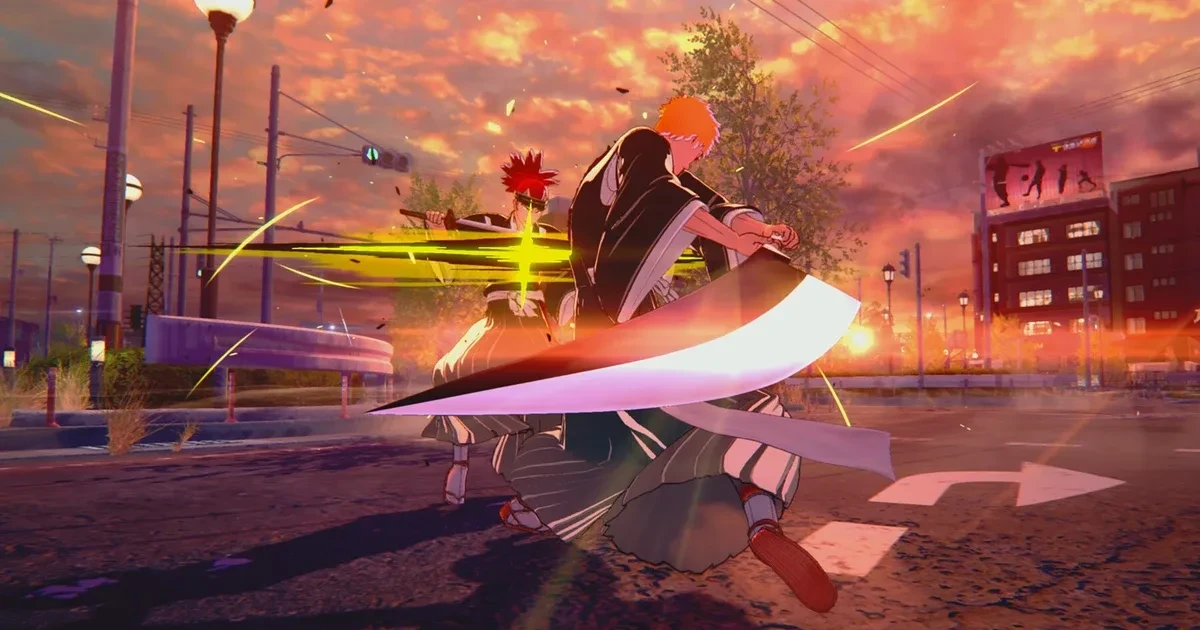
The swordplay has a good sense of impact. Basic attacks feel snappy. Counters have a satisfying freeze-frame effect. Special moves are loud, dramatic, and full of Bleach style. The game uses large typography, sharp cuts, and powerful visual effects to make big moments feel theatrical. When a counter lands cleanly or a finishing move connects, the screen has the energy of a manga panel coming to life.
The characters also feel more distinct than expected. This is one of the game’s biggest strengths. Soi Fon feels fast, aggressive, and direct. Shinji has a more technical, counter-focused style. Other characters bring their own rhythm, range, pressure tools, and special move identity. This makes the roster more enjoyable to explore.
The game offers Standard Mode and Manual Mode control styles. Standard Mode is easier to understand and allows players to perform flashy auto-combos with less effort. For casual players and Bleach fans who mainly want to enjoy the spectacle, this is a good entry point. You can pick a favourite character, press through simple combo strings, and still feel powerful.
However, Standard Mode also becomes repetitive after a while. The rhythm can start to feel too similar across matches. Light attacks, heavy attacks, then a special move. Repeat. It looks good, but it does not always feel expressive.
Manual Mode is where the combat becomes much better. It allows more control over combo routes, cancels, special moves, and pressure. It feels closer to the intended way to play for anyone who wants to understand the system properly. With Manual Mode, you are not just watching the game perform stylish actions for you. You are making more decisions yourself.
This gives the combat more room to breathe. You can experiment with strings, cancel attacks, find stronger routes, and learn how each character creates pressure. It also makes victories feel more personal. You are not only relying on the game’s assisted systems. You are learning the character.
Still, the combat has clear problems.
Movement can feel stiff. Dashes are not always as fast or fluid as they should be. Some attacks have awkward range, making it difficult to judge whether a move will connect. Ranged attacks can feel unreliable. Defensive options are also limited, which can make certain situations frustrating.
This is especially noticeable when you are under pressure. Many fighting games give players strong defensive resources to escape long offensive sequences. In Rebirth of Souls, your ability to escape can feel too restricted. Flash steps and other resources are tied closely to offensive success, meaning the player who is already winning can sometimes keep control too easily.
Blocking also does not always feel secure. If an opponent can pressure you heavily and then break your guard soon after, defence can feel more like a delay than a real answer. This makes some matches tiring, especially when you are waiting for resources to return or trying to escape a bad situation with limited options.
Because of this, Rebirth of Souls is not quite strong enough to stand beside serious competitive fighting games. It has depth, but it also has too many rough edges. However, as a character-focused anime action fighter, it is far better than expected.
WORLD DESIGN
As an arena fighter, BLEACH Rebirth of Souls is not about exploration or traditional world design. Instead, the world is built through arenas, character interactions, story presentation, and visual identity.
The arenas do their job, but they are not the highlight. They provide space for battles and often use locations familiar to Bleach fans, but they rarely feel like living places. Some stages look atmospheric, while others feel plain or empty.
The real world design comes from the way the game presents Bleach as a mood. The menus, character models, attack effects, and dramatic typography all help create a sense of style. It feels clean, sharp, and theatrical. The game understands that Bleach is not just about power levels. It is about presence.
Characters enter battle with confidence. Special attacks are framed with impact. Transformations feel like turning points. The world may not be deeply interactive, but the atmosphere is strong enough to carry the experience.
VISUAL DESIGN
Visually, BLEACH Rebirth of Souls is at its best during combat.
The character models are faithful and stylish. The sword slashes are bright and energetic. The special moves use strong colours, sharp effects, and dramatic framing. When the game freezes the action and places bold text around the characters, it captures the feeling of Bleach extremely well.
This is where the game feels most alive. It understands the visual language of the series: clean silhouettes, sudden bursts of speed, sharp blades, spiritual energy, and calm characters hiding overwhelming power.
The problem is the difference between combat visuals and story visuals. In battle, the game can look excellent. Outside of battle, the presentation often drops sharply. Cutscenes can look stiff, low-budget, and unfinished. The contrast is hard to ignore.
It feels like most of the visual care went into the fights, while the story scenes were left behind. That does not ruin the whole game, but it does make the experience feel uneven.
SOUND & MUSIC
The sound design supports the combat well. Sword hits have impact, special moves sound powerful, and the voice acting helps give each character presence.
The Japanese voice cast will likely be the preferred option for many fans, especially those familiar with the anime. However, the English cast also puts in strong work. Even when the scene direction is weak, the performances often help carry the emotion.
The music fits the action and keeps battles energetic, though it may not reach the same memorable level as the anime’s strongest tracks. Still, the overall sound package is solid and helps sell the drama of each fight.
PERFORMANCE
Performance is generally solid during combat, which is the most important thing for a fighting game. Battles feel responsive most of the time, and the game keeps its visual effects readable even when the screen becomes busy.
There can be some awkwardness in animation transitions and hit detection, but these feel more like design and polish issues than major technical failures. The game runs well enough to enjoy, though it would benefit from further tuning.
DIFFICULTY
Difficulty Rating
4 / 10
BLEACH Rebirth of Souls is not too difficult to pick up, especially in Standard Mode, but it becomes more demanding once you try to understand its systems properly.
New players may feel overwhelmed at first because the game explains many unique mechanics quickly. Terms, meters, counters, guard breaks, transformations, and finishing attacks can all feel like a lot to process. Once the basics click, the game becomes much easier to understand.
The real difficulty comes from learning match rhythm. You need to understand when to attack, when to counter, when to guard, when to use resources, and when to commit to a stronger move. Manual Mode adds more depth and gives the player more freedom, but it also asks for more practice.
For casual players, the game is approachable. For players who want mastery, there is enough here to study, though the mechanical roughness may hold it back long term.
REPLAY VALUE
Replay value depends heavily on how much you enjoy the combat and how attached you are to Bleach.
If you are a fan of the series, there is value in trying different characters, learning their styles, replaying battles, and spending time with the roster. Manual Mode gives the game more life because it encourages experimentation.
However, the story mode itself is not strong enough to carry repeated playthroughs. Once you have seen the main scenes, the main reason to return is combat.
For players who enjoy character mastery, there is enough here to revisit. For players who only want a strong single-player story, replay value may feel limited.
RECOMMENDED FOR
Recommended for:
- Bleach fans who want a stylish modern fighting game
- Players who enjoy anime arena fighters with more depth
- Fans who like experimenting with different characters
- Players who enjoy flashy counters, transformations, and special moves
Not recommended for:
- People who dislike stiff arena fighter controls
- Players who want deep exploration or RPG systems
- Anyone who is not already interested in Bleach
PERSONAL EXPERIENCE
My experience with BLEACH Rebirth of Souls was mixed, but mostly positive.
As a Bleach game, it gave me many of the things I wanted. The characters looked right. The special moves had style. The battles felt dramatic. When the combat clicked, it gave me that sharp Bleach feeling of two powerful characters trying to break each other’s resolve.
Soi Fon quickly became one of my favourite characters to use. Her speed, close-range pressure, and aggressive style made her feel satisfying. There is something very fun about rushing down an opponent with fast attacks, then finishing with a huge missile-like special move that feels completely opposite to her usual speed-based identity. That contradiction makes her memorable.
Manual Mode also made the game much more enjoyable for me. Standard Mode was useful at first, but it started to feel too limited. Once I moved into Manual Mode, the combat opened up. I started to see the game less as a simple arena fighter and more as a system with real potential.
At the same time, the flaws were always there. I often wished movement felt smoother. I wanted more defensive choices. I wanted story scenes to have more care. There were moments where the game looked excellent, followed by scenes that felt strangely unfinished.
That is the strange thing about Rebirth of Souls. It can be stylish and awkward within the same hour. It can feel ambitious and under-polished at the same time. But it never feels empty. There is a clear effort here to give Bleach fans something with identity.
FINAL VERDICT
BLEACH Rebirth of Souls is a flawed but worthwhile return for Bleach in game form.
It does not fully escape the problems of anime arena fighters. The movement can feel stiff, defensive options are too limited, and the story mode is far too uneven for a series as visually iconic as Bleach. Some cutscenes look cheap, some emotional moments lose their force, and the overall presentation outside of combat often feels unfinished.
But the combat saves the game.
Tamsoft has built a fighting system with more thought than expected. The life-stock structure, guard pressure, counters, transformations, and character-specific mechanics give battles a strong sense of rhythm. Manual Mode adds the expression that Standard Mode lacks, making the game more rewarding for players who want to learn it properly.
Most importantly, Rebirth of Souls understands Bleach’s style. The sword slashes, freeze frames, typography, special moves, and character presence all capture something important about the series. It may not always have the budget or polish to match the anime’s best moments, but it has enough soul to stand out.
For non-fans, this is a decent but uneven arena fighter. For Bleach fans, it is much easier to appreciate. It is not the definitive Bleach game, but it is a serious step forward. It gives the series a fighting game with personality, ambition, and a reason to keep playing.
BLEACH Rebirth of Souls is rough around the edges, but beneath those flaws is a stylish and genuinely interesting anime fighter.