
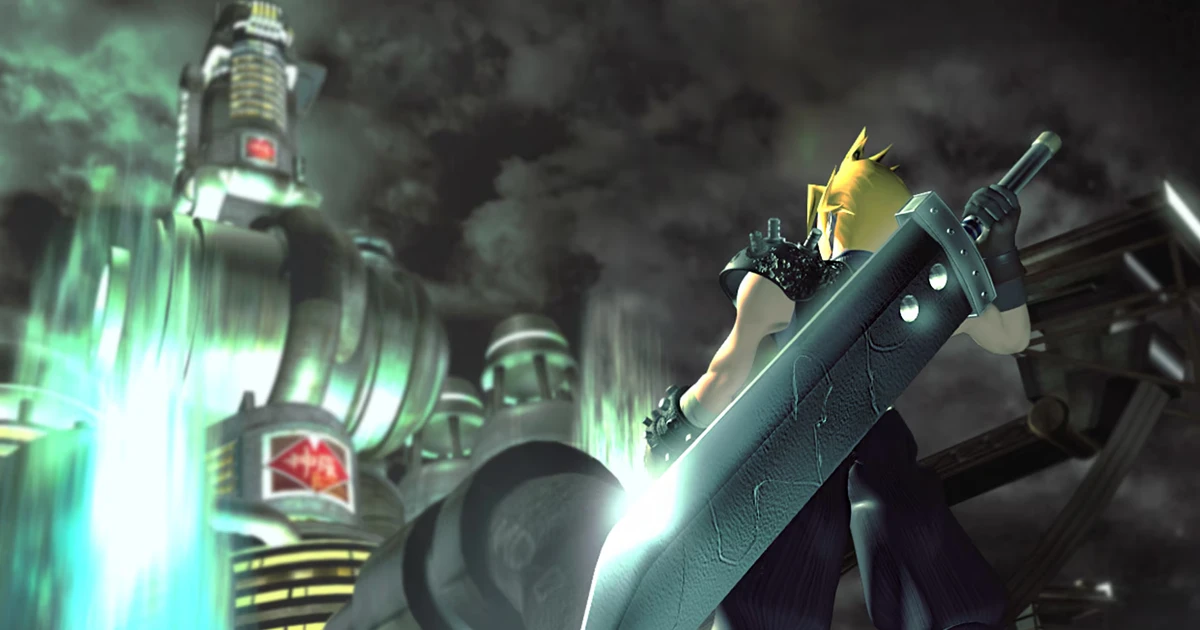
GAME INFORMATION
Game Title: Final Fantasy VII
Platform Played:PlayStation
Available Platforms:PlayStation
Media Type: Physical Disc
Developer:Square
Publisher:Square
Genre:Japanese Role-Playing Game
Release Year:1997
PLAY ENVIRONMENT
Playtime:48 hours
Completion Status: Completed
Difficulty:Default
Graphics Mode:Default
Playthrough Type:Blind playthrough
Game Version: Latest Version
Controller Used:Dual Analog Controller (SCPH-110)
Display Environment:CRT TV
QUICK VERDICT
Final Fantasy VII is still one of the most important RPGs ever made. It is not perfect, and some parts have clearly aged, especially the character models and early 3D presentation. But even now, it remains a deeply memorable adventure because of its world, music, characters, battle system, and atmosphere.
This is a game that helped define what console RPGs could become. It moved the genre into a more cinematic space, mixing traditional turn-based ideas with pre-rendered backgrounds, dramatic FMV scenes, emotional music, and a large science-fantasy world. Even if modern players may find some parts slow or dated, Final Fantasy VII still has a rare sense of identity.
It is not just remembered because it was popular. It is remembered because it felt massive, strange, emotional, and ambitious. For a PlayStation 1 game, it still carries a surprising amount of power.

PROS & CONS
pros
- Strong and memorable story
- Excellent soundtrack
- Materia system gives combat real flexibility
- Large world with a strong sense of adventure
- Iconic characters and villain
- Atmosphere still holds up
- A major landmark for Japanese RPGs
cons
- Random battles may feel slow for modern players
- Active Time Battle can pressure players who prefer slower turns
- Early visual style may be hard for new players to adjust to
STORY & NARRATIVE
Final Fantasy VII begins with a simple mission. Cloud Strife, a mercenary and former SOLDIER, joins the eco-terrorist group Avalanche as they attack a reactor owned by the Shinra Electric Power Company. At first, the story appears to be about rebellion, pollution, corporate greed, and a city being drained of life. Midgar is dark, metallic, crowded, and oppressive. It immediately gives the game a strong identity.
But Final Fantasy VII does not stay in one place for long. What begins as a fight against Shinra slowly expands into something much larger. The story moves from urban resistance to personal trauma, ancient history, identity, memory, and the threat of planetary destruction. The scale grows naturally, but it never fully loses the emotional weight of its smaller moments.
Cloud is one of the most interesting parts of the story. At first, he seems cold, confident, and distant. He acts like someone who has everything under control. Over time, the game slowly reveals that his identity is more fragile than it first appears. This gives the story a psychological layer that still feels unusual for a major RPG from 1997.
The supporting cast also gives the game much of its strength. Barret brings anger, conviction, and pain. Tifa adds warmth, loyalty, and quiet emotional conflict. Aerith brings gentleness and mystery, while also becoming central to the game’s spiritual themes. Red XIII, Cid, Yuffie, Cait Sith, and Vincent all add different tones to the journey, even if some characters receive more development than others.
Sephiroth remains one of the most iconic villains in gaming for a reason. His presence is built slowly. The game does not overuse him early on. Instead, it lets the player hear about him, follow the damage he leaves behind, and gradually understand the scale of his threat. This gives him a quiet, frightening power.
The story is not flawless. Some parts can be confusing, especially because of the original translation. Certain emotional moments may feel sudden depending on how much time the player spends with the characters. But the overall narrative still works because it is bold, strange, and emotionally sincere.
Final Fantasy VII is at its best when it combines world-ending stakes with personal sadness. It is about a dying planet, but also about people who are broken, guilty, lonely, and trying to keep moving. That is why the story still matters.
GAMEPLAY & SYSTEMS
Final Fantasy VII uses the Active Time Battle system, which gives combat a light sense of urgency. Instead of waiting for fixed turns, each character has a time bar that fills up. When the bar is full, that character can act. This keeps battles moving and creates more pressure than a fully turn-based system.
For some players, this makes combat feel more exciting. For others, it can feel stressful, especially when searching through menus for the right spell, item, or command while enemies continue attacking. This can be adjusted depending on settings, but the system still has a different feeling from slower RPGs.
The real strength of Final Fantasy VII’s gameplay is the Materia system. Materia are magical orbs that can be equipped into weapons and armour. They give characters access to spells, summons, commands, support effects, and passive abilities. This system is easy to understand at first, but it becomes more interesting as the player experiments.
Each weapon and piece of armour has materia slots. Some slots are linked, allowing different materia to work together. This is where the system becomes special. A player can link materia to create combinations, such as adding effects to attacks, countering with magic, improving healing, or changing how spells behave.
What makes the Materia system so effective is that it gives freedom without becoming too complicated. Characters still have their own personalities and Limit Breaks, but their battle roles can be shaped by the player. Cloud can be a physical attacker, a magic user, or a balanced fighter depending on the materia setup. This gives the party-building a flexible and creative feeling.
The Limit Break system also adds character to combat. As party members take damage, their Limit gauge fills. Once full, they can use a special attack or ability. These moves often have strong animations and give each character a personal style in battle. They also create satisfying moments during difficult fights, especially when a Limit Break arrives at the right time.
Summons were one of the most impressive parts of the game at release. They are long, cinematic, and dramatic. Modern players may find them slow after repeated use, but they still show how much Final Fantasy VII wanted battles to feel spectacular.
Outside combat, the game includes exploration, mini-games, side quests, optional characters, hidden bosses, and the world map. Not everything has aged perfectly, but the amount of content is still impressive. The game feels generous without losing focus.
WORLD DESIGN
Final Fantasy VII’s world is one of its strongest achievements. Midgar alone could have carried an entire game. It is a city of steel plates, slums, reactors, neon lights, and social division. The upper city lives above, while the poor live below. This visual structure immediately communicates the game’s themes without needing long explanations.
Leaving Midgar is still one of the most powerful moments in the game. After hours inside a dark industrial city, the world suddenly opens. The player steps onto a world map and realises that the story is much bigger than expected. Towns, forests, mountains, beaches, ruins, and strange facilities all create a sense of journey.
The world mixes fantasy, science fiction, environmental themes, ancient mystery, and industrial decay. This blend gives Final Fantasy VII a unique tone. It is not purely medieval like many earlier RPGs, and it is not purely futuristic either. It sits somewhere between magic and machinery.
The pre-rendered backgrounds help a lot. Many locations feel like painted scenes. Even when the 3D character models look simple, the backgrounds often carry atmosphere and detail. They give each area a strong visual mood.
There are times when navigation can be unclear because of the fixed camera angles and old visual design. Some exits and paths are not obvious. But this is part of the original PlayStation style, and it rarely ruins the experience.
VISUAL DESIGN
Final Fantasy VII’s visuals are both dated and beautiful. The low-poly character models are the most obvious weakness today. In normal gameplay, the characters can look blocky and toy-like. Their hands, bodies, and faces are extremely simple by modern standards.
However, the visual design still has charm. The pre-rendered backgrounds are often detailed, atmospheric, and memorable. Midgar, the Shinra building, Cosmo Canyon, Nibelheim, the Forgotten Capital, and many other locations still have strong artistic identity.
The FMV scenes were a major part of the game’s impact. For players in 1997, these scenes made Final Fantasy VII feel cinematic in a way few console games had before. Even now, they have historical value and emotional power. The opening scene, the train sequence, and several later story moments still carry weight because of their direction and music.
Battle visuals also remain important. Spell effects, summons, and Limit Breaks help battles feel dramatic. Some animations are slow, but they show the ambition Square had at the time.
Modern players should not expect the game to look clean or realistic. It is an early 3D RPG, and that shows. But if you meet the game on its own terms, there is still beauty here. Not beauty through realism, but beauty through mood, composition, colour, and imagination.
SOUND & MUSIC
The soundtrack is one of Final Fantasy VII’s greatest strengths. Nobuo Uematsu’s music gives the game much of its soul. Even when the visuals show their age, the music still feels powerful.
The battle theme, boss music, town themes, world map music, and character themes all help build the emotional identity of the game. Each track gives a place or moment a clear feeling. Midgar feels heavy and mechanical. Cosmo Canyon feels warm and spiritual. The world map feels lonely and open. The final areas feel strange and dangerous.
Aerith’s theme is still one of the most moving pieces of music in games. It is simple, gentle, and deeply emotional. Sephiroth’s music is also unforgettable, giving the villain a grand and terrifying presence.
Because the game uses older sound technology, some tracks may sound limited compared to later orchestral versions. But the compositions themselves are excellent. The melodies are strong enough to survive beyond the hardware.
Final Fantasy VII is a reminder that music can carry memory. Many players remember not just what happened in the game, but how it sounded when it happened.
PERFORMANCE
On original PlayStation hardware, Final Fantasy VII runs well for the type of game it is. Battles, exploration, and FMV transitions generally work smoothly, although load times and battle transitions are part of the old console RPG experience.
Modern versions may offer improvements such as faster loading, cleaner display options, or quality-of-life features depending on the release. But the original version still gives the most authentic sense of what made the game important at the time.
The main issue is not performance in a technical sense, but age. Menus, random battles, movement, and pacing may feel slower than modern RPGs. Players used to fast travel, quest markers, and instant combat may need time to adjust.
DIFFICULTY
Difficulty Rating
4 / 10
Final Fantasy VII is not an extremely difficult RPG for most players, but it does ask the player to understand its systems. Materia setup, healing, equipment, and party balance matter. Players who ignore materia growth or rush through the game may struggle later.
The difficulty is usually fair. Most main story bosses can be beaten with good preparation, healing, and sensible materia use. Optional content, especially superbosses, can be much harder and requires deeper system knowledge.
The Active Time Battle system can make some encounters feel tense, especially when the player needs time to think. But the game is generally accessible compared to many older RPGs.
REPLAY VALUE
Final Fantasy VII has strong replay value because of its materia combinations, optional characters, side content, hidden bosses, and memorable story. Players may return to try different party setups, collect powerful materia, breed chocobos, or experience the story again with a better understanding of Cloud and Sephiroth.
It is also a game worth replaying because its meaning can change with age. A younger player may focus on the spectacle and adventure. An older player may notice more of the sadness, identity, environmental themes, and emotional damage beneath the surface.
RECOMMENDED FOR
Recommended for:
- Players interested in classic JRPGs
- Fans of story-driven games
- Players who enjoy turn-based or ATB combat
- Anyone interested in gaming history
- Fans of strong music and atmosphere
- Players who want to understand why Final Fantasy became so important
Not recommended for:
- Players who cannot tolerate old graphics
- Players who dislike random battles
- Players who prefer full voice acting
PERSONAL EXPERIENCE
Final Fantasy VII feels like one of those games that exists between history and memory. It is not just a game people played. It is a game people remember as a moment. For many, it was their first cinematic RPG, their first massive world, or their first time seeing a game try to tell a story with this much scale and emotion.
Playing it today requires patience. The character models are old. The pacing can be slow. Some scenes are rough. But there is still something powerful underneath it all. The world has a strange sadness to it. The music stays with you. The characters feel larger than their simple models. The journey has weight.
It is not perfect, and it does not need to be treated like a flawless sacred object. It can be respected honestly. Final Fantasy VII is important because it dared to be big, emotional, stylish, and strange at a time when console RPGs were still finding their wider audience.
FINAL VERDICT
Final Fantasy VII remains one of the defining Japanese RPGs. Its graphics have aged, its translation can be uneven, and its pacing may challenge modern players. But its heart is still strong. The Materia system is flexible and rewarding, the world is unforgettable, the music is exceptional, and the story still has emotional power.
It is not the best RPG simply because people say it is. No single game needs to carry that title. But Final Fantasy VII deserves its reputation as one of the most important RPGs ever made. It changed what many players expected from console games, and it helped bring Japanese RPGs to a much wider audience.
More importantly, it still feels worth playing. Not only as a piece of history, but as an adventure with its own soul.
Final Fantasy VII is a game about memory, identity, grief, and the life of the planet. It is rough in places, but beautiful in others. Like many old games, it asks the player to look past age and meet it with patience.
For those willing to do that, it still offers something rare.