
GAME INFORMATION
Game Title: Elden Ring
Platform Played:PlayStation 5
Available Platforms:PlayStation 4, PlayStation 5, Xbox One, Xbox Series X/S, PC
Media Type:Physical
Developer:FromSoftware
Publisher:Bandai Namco Entertainment
Genre:Open-World Action RPG / Dark Fantasy RPG
Release Year:2022
PLAY ENVIRONMENT
Playtime:76 hours for the Platinum Trophy
Completion Status:Platinumed
Difficulty:Default
Graphics Mode:Performance Mode
Playthrough Type:Blind Playthrough
Game Version:Version 1.16.1
Controller Used: DualSense
Display Environment: 1080p Monitor
QUICK VERDICT
Elden Ring is not just my favourite game of all time. It is one of the clearest examples I have ever seen of a video game becoming a personal journey.
It is vast without feeling empty, difficult without feeling cruel, mysterious without feeling meaningless, and beautiful in a way that often comes from decay, silence, and struggle rather than comfort.
As an open-world action RPG, Elden Ring takes the language FromSoftware built through Demon’s Souls, Dark Souls, Bloodborne, and Sekiro, then stretches it across a world that feels ancient, broken, sacred, and alive. The Lands Between are not simply a map full of objectives. They are a place of pilgrimage. Every castle, swamp, cave, divine tower, ruined church, and distant golden horizon feels like it exists with purpose.
It is not a perfect game in the sense that it has no flaws. Some repeated bosses, uneven late-game damage spikes, obscure questlines, and occasional open-world fatigue can make parts of the journey feel rough. But Elden Ring’s greatness does not come from being polished into something safe. It comes from how deeply it understands discovery, challenge, atmosphere, and player-driven meaning.
For me, Elden Ring is the rare game that became more than entertainment. It became a memory, a symbol, and eventually something important enough to have tattooed on me. That is not something I can separate from this review, and I do not think I should.
Some games are reviewed.
Others are carried.
Elden Ring is a game I carry.

A 10/10 does not mean Elden Ring is without flaws.
It means that, for what it sets out to be, the experience is so powerful, influential, memorable, and personally meaningful that its flaws do not reduce its place as a masterpiece.
Elden Ring is not perfect because every single element is flawless. It is perfect because no other game has given me the same feeling of discovery, struggle, beauty, freedom, and personal meaning.
PROS & CONS
pros
- Elden Ring has one of the greatest open worlds ever designed.
- Its sense of discovery is extraordinary, with almost every direction leading to something strange, useful, beautiful, dangerous, or memorable.
- The combat system allows an incredible level of player expression through weapons, magic, Ashes of War, Spirit Ashes, armour, status effects, shields, bows, incantations, and different playstyles.
- The boss fights are unforgettable, especially the major remembrance bosses and late-game encounters that feel mythic in scale.
- The art direction is exceptional, creating a world that feels sacred, ruined, diseased, golden, lonely, and ancient all at once.
- The environmental storytelling is some of FromSoftware’s strongest work, allowing the world itself to carry much of the narrative weight.
- The replay value is enormous thanks to different builds, endings, challenge runs, co-op, New Game Plus, PvP, and the ability to approach the world in completely different ways.
cons
- Some bosses and enemies are repeated, which can slightly weaken the impact of certain encounters.
- The late game can feel harsh, with major damage spikes that may frustrate some players.
- Questlines are extremely obscure and can be difficult to follow without outside help.
- Some players may feel overwhelmed by the lack of traditional guidance.
- The size of the game can make repeat playthroughs feel less focused than previous FromSoftware titles.
STORY & NARRATIVE
Elden Ring’s story is not told in a traditional way. It does not sit the player down, explain the world in long cutscenes, and make every major theme obvious. Instead, it asks the player to listen carefully. It asks them to read item descriptions, study architecture, notice enemy placement, remember names, question motives, and walk through a world that has already collapsed long before they arrived.
The basic premise is simple enough. The Elden Ring has been shattered. Queen Marika is missing. The demigods have claimed fragments of power known as Great Runes. The Lands Between have fallen into war, decay, madness, ambition, grief, and stagnation. The player is one of the Tarnished, called back by grace to rise, struggle, and potentially become Elden Lord.
But that simple premise opens into something much larger.
Elden Ring is a story about power and what it does to those who inherit it. Nearly every major figure in the game is shaped by obsession, duty, loss, pride, faith, or desperation. Godrick grafts the limbs of others onto himself because he is weak and terrified of that weakness. Rennala is trapped in heartbreak and memory. Radahn becomes a legendary warrior reduced to a tragic, rotting force of nature. Rykard abandons dignity in pursuit of blasphemous power. Morgott defends an order that rejected him. Malenia waits in loyalty and disease. Mohg twists devotion into something monstrous.
These characters are not simply bosses. They are broken legends.
What makes Elden Ring’s narrative powerful is that the player often arrives after the most important events have already happened. You are not witnessing the golden age. You are walking through the remains. The story feels less like a straight line and more like archaeology. Every ruin, corpse, weapon, spell, monument, and battlefield is a fragment of history.
The Lands Between are full of religious imagery, royal collapse, family tragedy, cosmic horror, and decaying beauty. The world feels sacred, but that sacredness is deeply uncomfortable. Grace exists, but it may not be purely benevolent. The Erdtree is beautiful, but also oppressive. The Golden Order promises structure, but that structure has produced suffering, exclusion, and stagnation.
That is one of Elden Ring’s greatest strengths. It rarely gives the player easy moral answers. It presents a world where every order has a cost, every rebellion has consequences, and every ending carries uncertainty. Becoming Elden Lord sounds heroic, but the game constantly asks what kind of lord you are becoming, what kind of age you are creating, and whether the world can truly be repaired by sitting on a throne.
The NPC stories add a more human sadness to the mythic scale. Characters like Roderika, Hewg, Millicent, Blaidd, Alexander, Fia, D, Rogier, and Ranni make the world feel personal. Their stories are often quiet, tragic, strange, or unresolved. They remind the player that beneath all the gods, wars, and cosmic forces, there are still people trying to find meaning in a broken world.
Elden Ring’s narrative works because it trusts silence. It does not constantly explain itself. It lets the player stand in front of a ruined capital, a broken battlefield, a dead god, or a lonely NPC and feel that something terrible happened long before they arrived.
The story is not delivered like a film.
It is uncovered like a relic.
You are not simply told what the Lands Between means. You are asked to listen to it.
GAMEPLAY & SYSTEMS
Elden Ring’s gameplay is built on FromSoftware’s action RPG foundation, but the open-world structure changes the feeling of that foundation in a major way.
At its core, this is still a game about timing, positioning, stamina, patience, commitment, punishment, and learning. You attack, dodge, block, parry, cast, heal, retreat, observe, and adapt. Every enemy has rhythm. Every boss has patterns. Every mistake has consequences.
But Elden Ring gives the player more freedom than any previous Soulsborne game.
The genius of Elden Ring’s gameplay is that it gives players many ways to survive without removing the dignity of struggle. You can use a colossal sword, bleed build, sorcery, faith, dexterity weapons, shields, bows, poison, frost, fire, lightning, Spirit Ashes, summons, crafted items, or pure aggression. Some players will fight alone with nothing but a blade and timing. Others will prepare, summon, exploit weaknesses, and build carefully.
Elden Ring rarely tells you there is one correct way to play.
Instead, it asks what kind of Tarnished you are willing to become.
The build variety is enormous. A strength build feels completely different from an intelligence build. A faith build changes the rhythm of combat. A bleed build can turn aggression into a weapon. A shield-focused build creates a more defensive pace. Dual-wielding, colossal weapons, katanas, curved swords, spears, greatshields, claws, whips, bows, seals, staffs, and hybrid weapons all give the player a different identity.
Ashes of War are one of the game’s best additions. They allow weapons to feel more flexible and expressive, giving players access to powerful skills, movement options, elemental effects, and scaling changes. Instead of a weapon being locked into one narrow purpose, Elden Ring lets you shape it around your build.
Spirit Ashes are also a major change. They give solo players a form of support without requiring online co-op. This makes Elden Ring more approachable without simply adding an easy mode. The player still has to explore, upgrade, choose the right summon, and understand the fight. Spirit Ashes do not remove the game’s identity, but they do change how different players experience its difficulty.
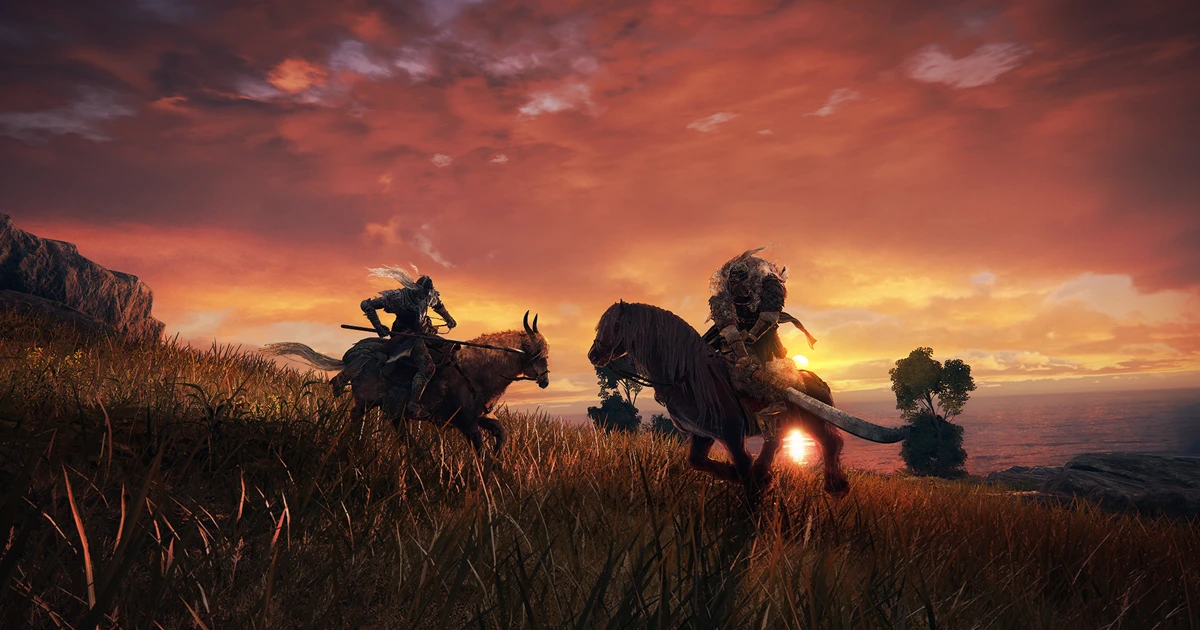
Torrent, the spectral steed, is another essential part of the game’s design. Mounted exploration gives the world speed and flow. Torrent makes the Lands Between feel wide without becoming unbearable to travel through. He also changes combat, allowing certain field bosses, dragons, and open-area encounters to feel distinct from traditional dungeon fights.
The combat is at its best when it feels like a conversation between the player and the enemy. You learn what can be punished. You learn when greed gets you killed. You learn when to heal, when to wait, when to stay close, and when to back away. Bosses like Margit, Godrick, Radahn, Morgott, Maliketh, Godfrey, Malenia, and Radagon all test different parts of the player’s understanding.
The game is not always perfectly balanced. Some late-game enemies hit extremely hard, and certain boss combinations can feel more chaotic than carefully designed. Some repeated bosses lose impact over time. There are moments where Elden Ring’s size stretches the Souls formula in ways that feel slightly uneven.
But even with those issues, the core gameplay remains incredible.
Elden Ring is a game about learning through failure. It does not treat death as an ending. It treats death as information. You died because you mistimed the dodge. You died because you got greedy. You died because you entered too early. You died because your build was not ready. You died because you were afraid. Then you return with knowledge.
That loop is what makes the game so addictive.
Failure becomes part of progress.
WORLD DESIGN
The Lands Between are one of the greatest worlds ever created in a video game.
What makes the world special is not simply its size. Many open-world games are large. Elden Ring is different because its world feels layered, sacred, hostile, mysterious, and meaningful. It does not feel like a checklist. It feels like a place of pilgrimage.
Limgrave is one of the best opening areas in modern game design. It teaches the player without feeling like a tutorial. You step into the world, see the Tree Sentinel, and immediately understand something important: not everything in front of you is meant to be defeated right now. That one lesson defines the whole game. You are free, but freedom requires judgement.
Stormveil Castle is the first major statement dungeon, and it is outstanding. It twists upward and inward, full of hidden paths, rooftops, locked doors, ambushes, strange rooms, and environmental storytelling. It feels like a true castle, not just a combat arena. By the time you reach Godrick, you feel like you have climbed through the body of a diseased kingdom.
Liurnia changes the emotional tone completely. After the grounded green of Limgrave and the brutality of Stormveil, Liurnia feels dreamlike, flooded, academic, and melancholic. Raya Lucaria rises from the mist like a magical institution trapped in time. It is not just a new region. It is a different mood.
Caelid is one of the most unforgettable areas in the game. It is disgusting, red, rotten, and hostile. It feels like the land itself is infected. The sky, music, enemy design, and visual atmosphere all tell the player that they have entered somewhere deeply wrong. It is not comfortable to explore, but it is impossible to forget.
Altus Plateau brings a sense of golden escalation. The journey toward Leyndell feels mythic. You are no longer simply surviving in the wild. You are approaching the heart of power. Leyndell itself is one of the most impressive city areas FromSoftware has ever made. It feels majestic and tragic at the same time, a capital filled with beauty, death, worship, and decay.
The underground areas are some of Elden Ring’s greatest surprises. Siofra River and Nokron create a feeling of impossible depth. The idea that beneath the already massive world is another hidden night sky gives Elden Ring a sense of scale that few games can match. It makes the player feel like the world is older, stranger, and deeper than they first imagined.
What makes the Lands Between special is the feeling that every horizon is hiding something worth finding. Elden Ring understands the power of distance. A castle on a cliff. A golden tree in the sky. A red wasteland on the edge of vision. A lift that descends into an impossible underground night. A tower you noticed twenty hours ago and only now understand how to reach.
The world keeps making visual promises, then rewards the player for believing those promises.
This is where Elden Ring separates itself from many open-world games. It does not rely heavily on icons, checklists, and obvious objectives. It uses curiosity as the main engine. You explore because you saw something. You continue because the world keeps surprising you. You remember locations because you found them through attention, not because a marker told you to go there.
There are some weaknesses. The repeated caves, catacombs, mines, and boss variants can become noticeable over time. Not every side dungeon is equally memorable. Some areas feel less polished or less exciting than others. The Mountaintops of the Giants, for example, can feel thinner compared to earlier regions.
But even with repetition, the overall world design remains astonishing.
The Lands Between feel like a world that does not exist for the player’s convenience. It feels ancient. It feels uncaring. It feels sacred. It feels lonely. It feels like a place where history has weight.
That is why it stays in the mind long after the credits.
VISUAL DESIGN
Elden Ring is not the most technically advanced game ever made, but it has some of the strongest art direction in modern gaming.
Its beauty is not clean. It is cracked, diseased, golden, sacred, and dying.
That is what makes it unforgettable.
The Erdtree is one of the most powerful visual symbols in any game. It dominates the skyline almost constantly, acting as a guide, a religious symbol, a source of wonder, and eventually something more unsettling. At first, it feels comforting. Then it begins to feel oppressive. It is beautiful, but its beauty has weight.
Each region has a strong visual identity. Limgrave is open, green, and inviting, but still dangerous. Liurnia is blue, misty, and melancholic. Caelid is red, rotten, and nightmarish. Altus is golden and autumnal. Leyndell is grand and decaying. The Mountaintops are cold and lonely. The underground cities are cosmic, ancient, and dreamlike.
Boss design is another major strength. FromSoftware understands silhouettes. Margit’s twisted posture, Godrick’s grafted body, Radahn’s impossible size, Rykard’s blasphemous horror, Maliketh’s black blade presence, Malenia’s elegance and danger, Godfrey’s warrior dignity, and Radagon’s broken divine form are all instantly memorable.
The armour and weapon design also deserve praise. Elden Ring gives players an enormous range of visual identities. You can look like a knight, a monk, a wandering samurai, a witch, a corrupted warrior, a golden champion, a prisoner, a prophet, a beast, or something stranger. The fashion is not just cosmetic. It helps players form a relationship with their character.
The game’s visual design is strongest when beauty and horror exist together. A golden capital filled with ash. A flower blooming from rot. A knight standing in a ruined church. A divine tower rising from the sea. A battlefield where an insane warrior still howls beneath the stars.
Elden Ring understands that fantasy does not need to be pretty to be beautiful.
Sometimes beauty is found in ruin.
Sometimes awe comes from fear.
Sometimes the most memorable image is not a perfect kingdom, but the remains of one.
SOUND & MUSIC
Elden Ring’s sound design and music are essential to its atmosphere.
The main theme immediately gives the game a sense of scale and destiny. It sounds grand, tragic, ancient, and violent. It prepares the player for a myth rather than a simple adventure.
The boss music is often excellent. Major fights feel elevated by their themes, especially when the music reflects the identity of the boss. Radahn’s battle feels like a festival and a tragedy. Godfrey’s theme carries strength and old warrior pride. Radagon’s music feels divine, broken, and final. The Elden Beast theme shifts the mood into something cosmic and strange.
But Elden Ring is just as powerful when it is quiet.
Some of the most memorable moments are not loud. They are the sound of wind across a field, footsteps inside a ruin, distant enemies moving in the dark, rain over stone, or the low atmosphere of a place you know you should not be.
The game uses silence with confidence. It allows the player to feel alone. It allows the world to breathe. It makes the sudden rise of boss music feel more dramatic because so much of the journey is spent in quiet tension.
Combat sound effects also carry weight. The clash of metal, the impact of heavy weapons, the sound of spells, the roar of dragons, the shriek of monstrous enemies, and the final hit on a difficult boss all help make the game feel physical.
Elden Ring’s soundscape is not just background audio. It is part of the world’s identity.
It knows when to overwhelm you.
It knows when to leave you alone.
PERFORMANCE
On PlayStation 5, Elden Ring was more than playable and never lost its hold on me, though it is not a technically flawless release.
Performance Mode is the way I would recommend playing, especially for a game where timing, reaction, dodging, and camera control matter. In a game this demanding, smoother performance matters more than visual sharpness.
There can be moments where the technical side does not fully match the ambition of the world. Frame-rate fluctuations, pop-in, and occasional roughness can appear, depending on platform, version, and area. Elden Ring’s presentation is carried more by art direction than raw technical power.
However, these issues never seriously damaged my experience. The atmosphere, combat, exploration, music, boss design, and world structure were strong enough that I rarely found myself focusing on technical imperfections.
That said, players who are highly sensitive to frame-rate issues may want to choose their platform and performance settings carefully.
For me, Elden Ring’s technical flaws were real, but minor compared to what the game achieved overall.
DIFFICULTY
Difficulty Rating
8 / 10
Elden Ring is difficult, but it is not difficult in one fixed way.
That is one of the most important things to understand about the game. It can be a lonely duel, a prepared hunt, a build-crafting puzzle, a test of patience, or a lesson in humility. The player is often allowed to leave, grow stronger, find a new weapon, upgrade gear, summon help, change strategy, or approach the problem differently.
This flexibility is why Elden Ring reached so many players without abandoning FromSoftware’s identity.
The game is hard because enemies punish carelessness. Bosses delay attacks, mix combos, close distance quickly, and often punish panic rolling. Late-game enemies hit extremely hard, and some bosses require serious patience and focus. Malenia, Blade of Miquella, is one of the most infamous examples, but she is not the only major wall.
However, Elden Ring also gives the player more tools than previous FromSoftware games. Spirit Ashes, summons, Ashes of War, powerful weapons, status effects, magic, incantations, crafting, shields, ranged options, and open-world levelling all allow players to shape the difficulty through preparation.
This is why I do not think Elden Ring is simply about being “hard.” It is about how you respond to hardship.
Do you keep trying the same thing?
Do you explore somewhere else?
Do you change your build?
Do you summon help?
Do you learn the attack pattern?
Do you accept that you are not ready yet?
The game constantly teaches humility. It teaches that walking away is not failure. It teaches that preparation matters. It teaches that patience can be stronger than aggression. It teaches that a boss that feels impossible at first can eventually become readable, manageable, and even beautiful.
That feeling is central to why Elden Ring works.
The difficulty gives meaning to progress. A new weapon matters because it might solve a problem. A level-up matters because it might let you survive one more hit. A discovered shortcut matters because it reduces fear. A defeated boss matters because you remember what it took to get there.
Some difficulty spikes do feel uneven. There are moments, especially late in the game, where damage numbers can feel excessive. Certain duo fights and repeated boss encounters can feel less elegant than the game’s best battles. Not every challenge feels perfectly tuned.
But overall, Elden Ring’s difficulty is one of its greatest strengths.
It is demanding, but flexible.
Punishing, but rarely hopeless.
Cruel, but often fair enough to make victory feel deserved.
REPLAY VALUE
Elden Ring has enormous replay value.
A first playthrough can easily take dozens or even hundreds of hours depending on how deeply the player explores. But the game does not end after one journey. Different builds can completely change the rhythm of the experience.
A strength build makes the game feel heavy and committed. A dexterity build makes it faster and sharper. A sorcery build changes distance and positioning. A faith build adds buffs, fire, lightning, healing, and holy damage. A bleed build encourages aggression. A shield build creates a more defensive style. Challenge runs can turn the game into something entirely different.
The endings also encourage replaying, especially for players interested in the game’s lore and different visions for the Lands Between. Ranni’s questline alone is enough to reshape how many players interpret the entire world.
New Game Plus gives players the chance to carry their build forward and experience the game with more confidence. Co-op and PvP also extend the game’s life, especially for players who enjoy helping others, duelling, invading, or experimenting with builds.
The Shadow of the Erdtree expansion also adds another major reason to return, giving Elden Ring even more long-term value.
For me, though, the replay value is not only mechanical. It is emotional.
The Lands Between are the kind of world I want to return to because they feel meaningful. Even when I know where things are, the atmosphere still works. The music still works. The sight of the Erdtree still works. The feeling of standing at the edge of a cliff and seeing something impossible in the distance still works.
Elden Ring is replayable because it is not just a game to clear.
It is a world to revisit.
RECOMMENDED FOR
Recommended for:
- Players who love difficult action RPGs.
- Fans of FromSoftware games such as Dark Souls, Bloodborne, Sekiro, and Demon’s Souls.
- Players who enjoy dark fantasy worlds filled with mystery, tragedy, and atmosphere.
- People who like exploration without constant markers and direct instructions.
- Players who enjoy build crafting, experimentation, and character identity.
- Anyone who wants a game they can sink into for dozens or hundreds of hours.
- Players who enjoy environmental storytelling.
- Players looking for one of the most important Japanese games of the modern era.
Not recommended for:
- Players who need clear quest logs and direct objective markers.
- Players who dislike high difficulty.
- Players who get easily frustrated by repeated deaths.
- Players who prefer cinematic storytelling with frequent cutscenes and clear explanations.
- Players who dislike large open worlds.
- Players who do not enjoy reading item descriptions, interpreting lore, or piecing stories together.
- Players looking for a relaxed, low-pressure fantasy adventure.
- People who dislike trial-and-error learning.
PERSONAL EXPERIENCE
I cannot pretend Elden Ring is just another game to me.
It is my favourite game of all time, and it holds a place in my life that goes beyond mechanics, bosses, weapons, open-world design, or review scores. I have it tattooed on me, which says more than any number ever could.
A tattoo is not something you do for a game you simply enjoyed.
It is something you do when a game becomes part of your story.
That is why this review cannot be completely detached. I can still talk about Elden Ring professionally. I can talk about its systems, world design, difficulty, structure, art direction, replay value, and flaws. But if I removed the personal side, the review would become dishonest.
Elden Ring means too much to me for that.
What Elden Ring gave me was not comfort in the soft sense. It did not make things easy. It did not wrap me in warmth and tell me everything would be fine. Instead, it gave me a world that understood struggle.
A world where everything beautiful was damaged.
A world where grace still existed in ruined places.
A world where progress came through patience, failure, learning, and returning.
That is why it connected with me so deeply.
There is something powerful about being placed into a broken world and still being asked to move forward. The Lands Between are lonely, violent, strange, and full of suffering. But they are also beautiful. There is light in the distance. There are quiet churches. There are hidden stars underground. There are characters still trying to fulfil promises. There are warriors still standing. There are paths that only reveal themselves if you keep going.
That feeling stayed with me.
Every major step felt earned. Every boss defeated felt like a personal victory. Every new region felt like stepping further into a myth I was not meant to fully understand. The game made me feel small, but not meaningless. Lost, but not without purpose.
That is a rare feeling.
Elden Ring also came to represent something larger about why I love games. It reminded me that games can be more than entertainment. They can be places of discipline, reflection, beauty, and emotional memory. They can challenge you when you feel weak. They can give structure when life feels unclear. They can create a world worth walking through when the real one feels heavy.
That does not mean games fix life. They do not. They are not a replacement for real support, family, therapy, medicine, or personal responsibility.
But sometimes a game can give you a place to breathe.
Sometimes a game can give you a reason to keep taking the next step.
For me, Elden Ring did that.
The Platinum Trophy mattered because it felt like more than a checklist. It felt like completing a pilgrimage. It meant I had stayed with the world long enough to understand it, struggle through it, and honour it properly. It meant I had not just seen the credits. I had committed myself to the journey.
That is why Elden Ring became part of me.
Not because it is flawless.
Not because every boss is perfect.
Not because every cave is memorable.
Not because every system is equally polished.
But because the total experience reached me in a way no other game has.
There are games that entertain you for a weekend.
There are games that impress you.
There are games that challenge you.
Then there are games that stay with you.
Elden Ring stayed with me.
It became one of those rare experiences that made me feel like games can still be sacred in their own strange way. Not sacred as in perfect. Sacred as in meaningful.
For Hermit Talks Games, this is exactly the kind of game I want to write about. Not because every game needs to be this large, difficult, or famous, but because Elden Ring proves that games can give players something to carry.
A memory.
A lesson.
A symbol.
A reason to keep walking forward, even when the path is unclear.
FINAL VERDICT
Elden Ring is one of the greatest games ever made.
Not because every individual piece is flawless, but because the complete journey feels almost impossible in scale, confidence, and emotional force. It is a game about broken gods, ruined kingdoms, lost grace, impossible ambition, and the quiet determination of a nameless Tarnished who keeps standing back up.
As a review, I can say that its world design is extraordinary. Its combat is deep. Its build variety is immense. Its art direction is unforgettable. Its music is powerful. Its atmosphere is unmatched. Its sense of discovery is among the best the medium has ever produced.
As a player, I can say something simpler:
No game has meant more to me.
Elden Ring is difficult to recommend casually because it asks a lot from the player. It asks for patience, attention, humility, and a willingness to be lost. It does not always explain itself. It does not always guide you clearly. It does not always feel fair. It can frustrate, exhaust, confuse, and overwhelm.
But for those willing to meet it on its own terms, it offers something rare.
A world that feels genuinely worth enduring.
The Lands Between are not simply a setting. They are a place of memory. A place of suffering. A place of beauty. A place where ruin and grace exist together. A place where the player is not special because they are chosen to win, but because they keep going despite everything standing in their way.
That is why Elden Ring matters.
This is not just my favourite FromSoftware game.
It is my favourite game of all time.
It is a game I finished, mastered, remembered, and marked permanently on myself. That makes this review impossible to separate from personal feeling, but I think that is right. The best games do not remain distant objects. They become part of the player.
Elden Ring became part of me.