
GAME INFORMATION
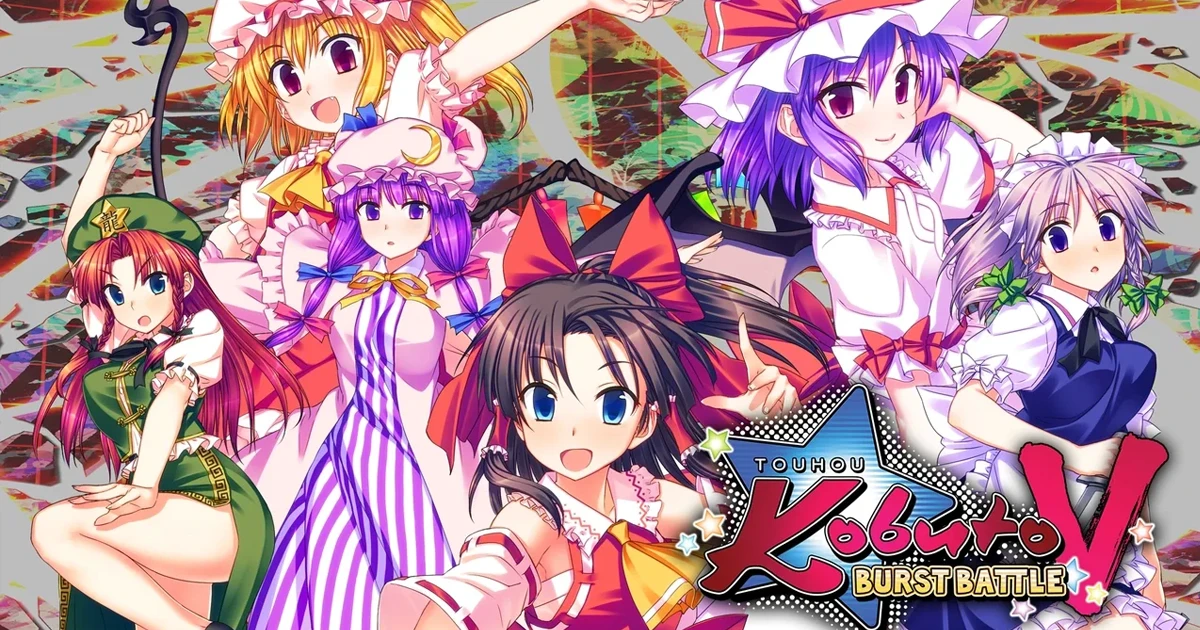
Game Title: Touhou Kobuto V: Burst Battle
Platform Played:PlayStation 4
Available Platforms:Nintendo Switch, PlayStation 4, PlayStation Vita
Media Type: Physical
Developer:CUBETYPE
Publisher:NIS America
Genre:3D Arena Fighter / Shoot ’em up Fighter
Release Year:2017
PLAY ENVIRONMENT
Playtime:11 hours
Completion Status:Completed all modes
Difficulty:Default
Graphics Mode:Default
Playthrough Type:Standard playthrough
Game Version:Latest Release
Controller Used:DualShock 4
Display Environment:1080p Monitor
QUICK VERDICT
Touhou Kobuto V: Burst Battle is a strange, lively, and uneven arena fighting game that carries the charm of the Touhou universe, but struggles to turn that charm into a polished combat experience. Its character portraits, voice acting, and selected music tracks give it personality, while Arcade Mode and Score Attack offer some enjoyable replay value.
However, the game is held back by rough visuals, weak tutorial support, awkward combat feedback, camera issues, and systems that are not explained clearly enough for newcomers. It is not without value, especially for existing Touhou fans, but it feels more like a small curiosity than a strong entry point into the series.

PROS & CONS
pros
- Japanese voice acting adds energy and charm.
- Well-drawn character portraits give the cast personality.
- Arcade Mode is simple, replayable, and easy to return to.
- Score Attack gives the game a stronger sense of purpose.
cons
- Visuals are rough, especially during combat.
- Camera behaviour can make fights frustrating.
- Combat lacks impact, precision, and depth.
STORY & NARRATIVE
Touhou Kobuto V: Burst Battle takes place within the wider Touhou Project universe, a series known for its strange atmosphere, bullet-hell action, memorable characters, music, print works, and deep fan culture. For players already familiar with Touhou, there is a certain pleasure in simply seeing characters like Reimu Hakurei and Marisa Kirisame placed into a different kind of game. The cast has personality, colour, and a playful sense of chaos that gives the game a recognisable identity.
The story itself, however, is quite light. Each character has their own route through Story Mode, usually built around a series of battles leading to a final encounter. There are small pieces of dialogue and character interaction along the way, but the writing rarely becomes something truly memorable. It does enough to frame the fights, but not enough to make the player feel deeply invested.
For Touhou fans, the story may work better as a small extra. It lets familiar characters bounce off each other, and that alone may be enough for some players. For newcomers, it is much less effective. The game does not do much to explain who these characters are, why their relationships matter, or what makes the Touhou world interesting. It assumes some level of existing knowledge, and because of that, it is not the strongest introduction to the series.
That is a shame, because Touhou as a wider world is odd, charming, and full of character. There is a unique energy to its setting and cast, but Burst Battle only shows a small surface-level version of that appeal. The story is not terrible, but it feels thin, especially when compared to how much personality the Touhou series can carry through music, art, and atmosphere.
GAMEPLAY & SYSTEMS
Touhou Kobuto V: Burst Battle is a 3D arena fighting game with bullet-hell elements. Instead of traditional 2D fighting game movement, each match takes place in a small arena where players can move, dash, jump, block, fire projectiles, use melee attacks, and attempt to wear down their opponent. In concept, this is a good fit for Touhou. The original series is famous for dense projectile patterns, so turning that idea into a one-on-one arena fighter makes sense.
The basic control layout is simple. The player has a main attack, sub attack, charged attack, movement options, and defensive tools. Attacks also have cooldowns, which means button mashing is not always rewarded. If you overuse certain options, you may be left waiting for them to become available again. This gives the combat a small layer of resource management, where timing and spacing matter more than they first appear to.
At first, the game feels approachable. You can move around, fire attacks, close distance, and experiment with the cast without needing to memorise long combo strings. This makes it easy to start playing, especially on Switch, where quick sessions are one of the system’s strengths. The problem is that the simplicity does not develop into something much deeper.
Characters have different attack patterns and slight differences in style, but they do not feel distinct enough. Some may suit close-range play better, while others feel more comfortable at distance, but the overall structure remains similar from character to character. This makes the roster easy to understand, but it also makes it harder to stay excited about learning everyone properly.
The combat itself can also feel loose. Hits do not always feel as satisfying as they should, and the feedback can be unclear. When the action becomes messy, it is not always obvious what hit you, where the opponent is, or what you should have done differently. This is where the game starts to struggle. A fighting game needs clarity. Even when it is chaotic, the player should feel that they understand why they won or lost. Burst Battle does not always provide that feeling.
Blocking is one of the more frustrating parts of the experience. In theory, it should be an important defensive tool. In practice, it can feel temperamental. There were moments where blocking seemed unreliable, especially during tougher fights. Whether this comes from timing, positioning, animation, or unclear feedback, the result is the same: the player can feel punished without fully understanding why.
The game also has issues with stun-locking. Once knocked down or caught in a sequence of hits, there are times where the player simply has to wait for control to return. Temporary protection after getting up helps, but it does not fully remove the frustration. Losing control in a fighting game can be acceptable when the system is clear and balanced, but here it can feel clumsy.
The biggest mechanical problem is the lack of proper explanation. The game does not teach its systems well enough, especially for newcomers. Important mechanics like Charge and Action Bars are not explained clearly, which means players may have to search outside the game to understand how things work. For a niche spin-off based on an already intimidating series, this is a serious weakness.
A good tutorial would have helped a lot. It could have explained movement, cooldowns, blocking, charge mechanics, character differences, and scoring systems in a calm and structured way. Without that, the player is left to experiment, and not always in a satisfying way.
WORLD DESIGN
As a fighting game, Touhou Kobuto V does not have traditional world exploration. The “world” is presented through its arenas, characters, dialogue, and overall Touhou atmosphere. The arenas function as battle spaces rather than meaningful locations, and they are mostly simple, open areas designed to support movement and projectile combat.
This is understandable for the genre, but it also means the game rarely creates a strong sense of place. The Touhou universe has a rich and unusual identity, but the arenas here do not fully capture that. They work as stages, but they do not feel especially memorable.
There is still a small charm to the presentation. The characters, music, and visual style give the game a clear connection to Touhou. Still, the world design feels limited. It supports the combat, but it does not elevate it.
VISUAL DESIGN
The strongest part of the visual design is the character portrait artwork. The portraits are well drawn, expressive, and full of the personality that Touhou fans expect. They help give the game charm, especially during dialogue scenes. Even when the story itself is not especially strong, the portraits make the cast more enjoyable to watch.
The in-game visuals are less successful. The character models and arenas look rough, and the overall presentation lacks polish. This does not mean the game has no style, but it often feels limited. In motion, the fights can look messy rather than elegant, and that hurts both the visual appeal and the gameplay readability.
This is especially noticeable because Touhou as a series is so closely tied to strong music, patterns, character identity, and fan imagination. Burst Battle has pieces of that identity, but the 3D visuals do not always do it justice. The game looks like it has heart, but not enough refinement.
The camera is also a major visual issue. Because opponents move quickly around the arena, it can be easy to lose track of them. When the camera fails to keep the action clear, the player can feel disconnected from the fight. In a game built around dodging, spacing, and projectile awareness, this is a serious problem.
SOUND & MUSIC
The sound design is one of the better parts of Touhou Kobuto V. The voice acting gives the characters energy, and it helps the game feel more alive. Even when the combat is not especially polished, the vocal performances add charm and personality.
The soundtrack is more mixed, but there are definitely enjoyable tracks. Some pieces carry the lively Touhou spirit well, giving battles a sense of rhythm and energy. Fans of the series may find more to enjoy here than newcomers, especially if they already have affection for Touhou music and its style.
However, the music does not fully carry the game. Strong tracks help, but they cannot hide the lack of polish in the combat. The sound and voice work improve the experience, but they are supporting strengths rather than enough reason to recommend the game on their own.
PERFORMANCE
Touhou Kobuto V works best as a portable, quick-session game. The structure suits short bursts of play, especially in Arcade Mode and Score Attack. Being able to play a few fights while waiting or relaxing makes the game easier to appreciate.
There are no major performance notes here, but the experience is affected by visual roughness, camera behaviour, and combat clarity. Even if the game runs acceptably, it does not always feel smooth in the ways that matter most. Fighting games rely heavily on responsiveness, readability, and confidence in the controls. Burst Battle does not always provide that.
The technical side is not disastrous, but the overall feel is uneven.
DIFFICULTY
Difficulty Rating
4 / 10
Touhou Kobuto V is not a deeply difficult game in the traditional sense, but it can be awkward. The challenge often comes less from clever opponent design and more from not fully understanding the systems, losing track of the opponent, or being caught in frustrating situations.
The lack of proper tutorials makes the difficulty feel rougher than it should. A newcomer may not understand how to use certain mechanics effectively, especially Charge and Action Bars. This creates a strange learning curve. The game looks simple, but some important details are hidden or poorly explained.
For players willing to experiment, lower the AI difficulty, and spend time in training-style modes, the game becomes easier to manage. But the process is not as clean as it should be.
REPLAY VALUE
Replay value is where Touhou Kobuto V becomes more enjoyable. Story Mode is short and not especially strong, but Arcade Mode and Score Attack give the game a better sense of purpose.
Arcade Mode is simple but effective. It works as a stamina test where you try to win consecutive battles and improve your score. Since health does not fully regenerate after every fight, each match matters. This gives the mode a little more tension than a normal sequence of battles.
Score Attack is even better. Instead of simply rewarding wins, it rewards performance. Taking less damage, attacking well, dodging, and blocking all contribute to your score. This gives the player a clearer reason to improve. Even if the combat is flawed, Score Attack makes the game feel more focused.
For a portable system like the Switch, these modes help a lot. Touhou Kobuto V is not a game I would want to play for long sessions, but it works better in short bursts. A few arcade runs can be enjoyable, especially when approached casually.
RECOMMENDED FOR
Recommended for:
- Existing Touhou fans who want a small spin-off curiosity.
- Players who enjoy simple arena fighters.
- Players who enjoy chasing high scores in short sessions.
- Players looking for a short, portable arcade-style experience.
Not recommended for:
- Players who need deep fighting game systems.
- Players who expect strong tutorials.
- Players who dislike rough visuals or unclear mechanics.
PERSONAL EXPERIENCE
My time with Touhou Kobuto V was mixed. I liked pieces of it more than I liked the full game. The character portraits have charm, the voice acting adds life, and some of the music is genuinely enjoyable. There is a lively Touhou energy here, even if it does not always come through clearly in the gameplay.
The combat, however, often left me frustrated. At first, I enjoyed the simplicity. Moving around, firing attacks, jumping, dashing, and trying different characters made the game easy to pick up. But over time, the limitations became harder to ignore. The camera could lose the opponent, blocking did not always feel reliable, and getting knocked down or trapped in attacks made some fights feel messy.
The biggest issue was how little the game teaches you. I do not mind learning through play, but important mechanics still need to be explained. Having to look outside the game to understand key systems is never ideal, especially when the game already feels niche. A proper tutorial could have made the experience much smoother.
That said, I did enjoy Arcade Mode and Score Attack. These modes gave the game its best rhythm. They are simple, repeatable, and suited to the Switch. Playing a few runs in short sessions felt better than trying to treat the game like a deep competitive fighter. When approached as a small arcade-style Touhou spin-off, it has moments of fun.
Still, it is hard to ignore the feeling that Touhou Kobuto V needed more time, more polish, and better guidance for players. It has charm, but charm alone cannot fully carry it.
FINAL VERDICT
Touhou Kobuto V: Burst Battle is a game with a clear identity, but uneven execution. It has the personality of Touhou, some enjoyable music, strong character portraits, and replayable arcade modes, but its weak tutorials, rough visuals, awkward camera, and shallow combat hold it back.
For Touhou fans, it may be worth trying as a curious spin-off, especially if found cheaply or played casually on Switch. For newcomers, it is not the best place to begin. The game expects familiarity with its world while also failing to explain its mechanics properly, which makes it difficult to recommend as an entry point.
There is enjoyment here, but it is limited. Like a small side path near a shrine, Touhou Kobuto V has charm if you already know why you are there. But for most players, the path is rough, unclear, and not quite rewarding enough to fully satisfy.