
GAME INFORMATION
Game Title: Warriors Orochi 2
Platform Played:PlayStation 2
Available Platforms:PlayStation 2, Xbox 360, PSP
Media Type: Physical
Developer:Omega Force
Publisher:Koei
Genre:Hack and Slash, Musou, Action
Release Year:2008
PLAY ENVIRONMENT
Playtime:10 hours
Completion Status:Completed
Difficulty:Normal
Graphics Mode:Default
Playthrough Type:Standard playthrough
Game Version:PlayStation 2 retail version
Controller Used:DualShock 2
Display Environment:CRT TV
QUICK VERDICT
Warriors Orochi 2 is a difficult game to review because it has value, but its value depends on if the player already enjoys the Warriors formula. As a crossover between Dynasty Warriors and Samurai Warriors, it provides a large roster, many battles, and a lot of character progression. For hardcore fans, there is plenty to unlock, level up, and complete.
However, as a sequel, Warriors Orochi 2 plays it safe. It doesn’t push the series forward and much of the experience feels familiar, especially if you played the first Warriors Orochi or other Musou titles from the same period. The core loop of defeating large groups of enemies, defeating officers, capturing areas, and moving from objective to objective is still present, but the game struggles to find new ways to make the game loop feel fresh.
There is satisfaction in building a team, clearing stages, and levelling characters if you enjoy repetitive action games. However, for players looking for deep combat, improved presentation, and a polished sequel, Warriors Orochi 2 may feel disappointing.

PROS & CONS
pros
- Large character roster
- Simple and easy to understand combat
- Some appeal for players who enjoy repetitive grinding
- Lots of characters to level and strengthen
cons
- Very little meaningful innovation from the first game
- Combat becomes repetitive quickly
- Story feels thin and familiar
- Many reused assets, voice clips, and music tracks
STORY & NARRATIVE
The story of Warriors Orochi 2 follows on from the crossover world established in the first game. The Heroes from China’s Three Kingdoms period and Japan’s Warring States period are brought together to take on demonic forces and supernatural conflict. Seeing famous warriors from different histories and legends fight together is naturally appealing, and the Warriors Orochi series has always had a fun “what if” energy.”
The issue is that Warriors Orochi 2 does not make strong use of that idea. The story is very similar to the structure and tone of the first game with many ideas returning. Orochi himself is not present for most of the story due to the events of the previous game. Although, the game never feels dramatically different because of that. Instead, the story exists to give the player a reason to move from battle to battle.
Warriors games are typically designed around action, roster size, and chaos on the battlefield instead of deep storytelling. Even so, Warriors Orochi 2 feels like it could have done more with its crossover premise. With so many legends and characters from separate eras, cultures, and conflicts, there was room for stronger character moments and more interesting interactions.
The narrative is hard but not impossible to follow. It is light, repetitive, and rarely memorable. For players who only need a simple reason to enter the next stage, it provides enough. However, for players hoping the sequel would deepen the world or give the game more emotional weight, it will likely feel underwhelming.
GAMEPLAY & SYSTEMS
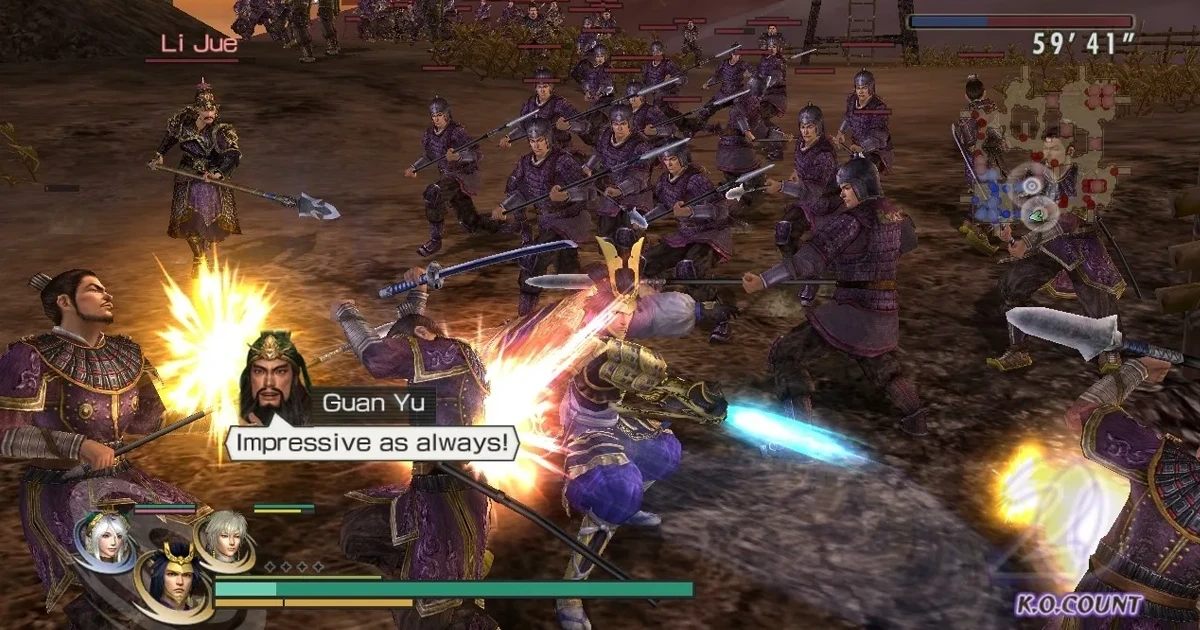
Warriors Orochi 2 plays like a traditional Musou game. You enter the battlefield, defeat large groups of enemies and officers, complete objectives, and gradually push the battle in your favour. The gameplay structure is direct, familiar, and easy to understand.
The main system that gives Warriors Orochi its identity is the three character team system. Instead of controlling a single warrior, you bring a team of three into battle and can freely switch between them. This is one of the better systems in the Orochi series because it gives the player more flexibility. You can build your team based on your favourite characters, attack styles, or the character you wish to level.
Each warrior can be levelled individually and the roster is large enough that there is always someone else to try. For players who enjoy collecting and strengthening characters, this is probably the strongest part of the game. The game understands the pleasure of choosing a favorite warrior and making them stronger over time.
However, the combat itself doesn’t improve much. Most characters rely on normal attacks, charge attacks, Musou attacks, and basic crowd control. There is a nice rhythm to clearing soldiers and officers across the battlefield, but over time the repetition becomes hard to ignore.
The issue is not that Warriors Orochi 2 is simple. Simple games can be lots of fun when the flow is strong and the systems are refined. The issue is that the game does not provide much variety or challenge. Battles often feel similar, objectives repeat, and enemy encounters rarely ask the player to strategise.
The game also has two additional modes called Dream Mode and Versus Mode. These additional modes sound interesting, but they do not add enough to change the overall experience. Dream Mode provides more scenarios without changing the core gameplay. Versus Mode attempts to convert the combat into something closer to a fighting game. However, the combat system does not feel designed for that level of precision. The result feels more like an extra feature instead of a meaningful expansion.
Warriors Orochi 2 is fun when treated as a comfort grinding game. Choose characters, clear stages, level up, and repeat. If that gameplay loop is enough for you, then there is a lot of content here. However, if you prefer deeper systems, or stronger enemy design, then this game struggles.
WORLD DESIGN
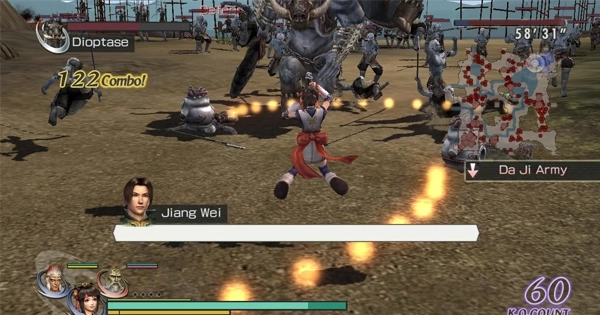
The battlefield design in Warriors Orochi 2 follows the standard Musou structure. The stages are designed around large maps with enemy groups, officers, gates, bases, and objectives throughout the area. The player moves through these areas while adjusting to mission updates and changing battle conditions.
You are not just fighting in small arenas. You are moving across a larger battlefield where multiple events are happening simultaneously. This is one the best parts of the Warriors formula. It provides the player the feeling of being one powerful warrior within a larger conflict.
However, the actual stage flow often feels repetitive. Most battles follow a similar pattern. Move to a marked area, defeat an officer, capture a position, protect an ally, then move to the next objective. There is nothing wrong with this structure on its own, but Warriors Orochi 2 does not offer enough to make each battlefield feel unique.
The crossover setting could have been improved upon in multiple ways. Bringing Chinese and Japanese historical worlds together with supernatural elements should have felt grand and strange. Sadly, the game doesn’t always capture that feeling and the maps and scenarios typically feel functional rather than memorable.
The world design serves the gameplay, but rarely elevates it.
VISUAL DESIGN
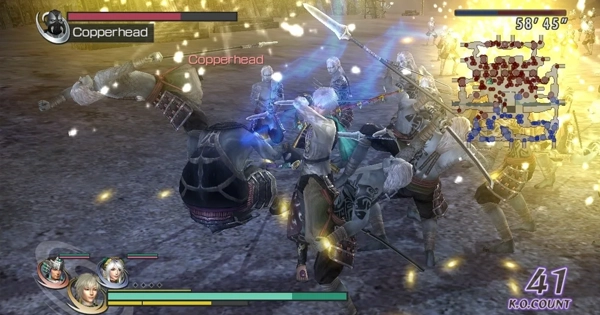
On PlayStation 2, Warriors Orochi 2 looks dated. This is understandable as the game is built on older technology and uses a formula that focuses on multiple enemies on screen rather than visual detail. As a result, the series has always had to balance scale and performance.
Although, the presentation still feels limited. Character models, environments, animations, and effects do not evolve much compared to earlier entries. The game typically looks flat, and the presentation of the battlefield lacks the polish that could have helped the sequel feel more exciting.
The visual design does have its charm though. Many of the character designs are still appealing if you enjoy the exaggerated style of Dynasty Warriors and Samurai Warriors. The roster has a strong identity and each character stays recognisable. For long-time fans, simply seeing these characters together can be enjoyable.
As a sequel, Warrior Orochi 2 does not feel visually ambitious. It is presented more like an expansion of existing entries.
SOUND & MUSIC
The sound design is another area that Warriors Orochi 2 feels familiar. Some music and voice lines are heavily reused adding to the sense that the sequel is not attempting to stand apart from the first game.
The music can still work during battles. Musou games typically benefit from upbeat and energetic tracks that keep the player moving, and Warriors Orochi 2 does have moments that support this. However, it rarely feels fresh or memorable to the overall experience.
The English voice acting is difficult to enjoy. There is some old school charm to some lines, but many feel stiff and awkward. This may appeal to some players, but for me it weakened the atmosphere.
The lack of a Japanese voice option on the PlayStation 2 version is disappointing. For a game designed around Japanese and Chinese historical figures, a Japanese audio option would have matched the tone of the game and would have been respectful to the source style.
PERFORMANCE
On PlayStation 2, Warriors Orochi 2 is playable, but is limited by the technology and the age of the engine. The game utilises large enemy groups and constant battlefield movement, resulting in simpler visuals. Even so, the overall presentation still feels behind many other games of its time.
The performance is not the main problem on PS2, but the game does not offer a smooth or polished experience. The larger issue is that the technical side does help the experience feel fresh. The gameplay remains familiar with dated visuals making the repetition more noticeable.
For players who grew up with the PlayStation 2 Warriors games, this may not be an issue. There is a level of nostalgia to the game's roughness. But for new players playing Warriors Orochi 2 today, the technical age of the game is very clear.
DIFFICULTY
Difficulty Rating
4 / 10
Warriors Orochi 2 is not difficult in normal play. The challenge is delivered from dealing with stronger officers, managing objectives, and keeping allies alive. The combat is typically straightforward, especially once you understand your characters and start leveling them.
This makes the game approachable. The controls are simple, you don't need deep action game knowledge, and the game gives you many powerful characters to use.
However, the low difficulty also contributes to the feeling of emptiness. This is because enemies are often designed to be part of crowds to be cleared, resulting in battles starting to feel almost automatic. There is a difference between being active and being challenged, and Warriors Orochi 2 tends to struggle with that balance.
For casual grinding, the difficulty is fine. For players who desire depth or demanding combat, it will feel too light.
REPLAY VALUE
Warriors Orochi 2 has a large amount of replay value in terms of content. There are lots of characters to unlock and level. There are multiple storylines, additional game modes, and plenty of stages to clear. If you are a completionist, this game will provide you with a lot to do.
The question is does the gameplay feel rewarding enough to keep playing. For me, this is where the game struggles. Leveling characters can be satisfying because I enjoy RPG style progression, but the battlefield doesn’t give enough back. Gradually, battles become repetitive and lose all meaning.
Although, dedicated fans may find many hours of fun here. Casual players may lose interest much sooner.
RECOMMENDED FOR
Recommended for:
- Hardcore Warriors fans
- People who like large character rosters
- Players who enjoyed the first Warriors Orochi
- Completionists who like levelling many characters
Not recommended for:
- Players who value strong storytelling
- Players who dislike repetition
- Players who want deep combat systems
- Players looking for a major sequel improvement
PERSONAL EXPERIENCE
My experience with Warriors Orochi 2 was mostly one of disappointment sadly. I can understand why someone might enjoy it, especially if they already enjoy the Warriors formula. The gameplay systems are comfortable and familiar making the game easy to play and understand.
But after spending time with it, I found it difficult to stay engaged over time. The game feels too similar to previous entries and feels like a repackaged game. The large roster is impressive, but using it did not feel rewarding enough for me.
I do not want to dismiss the game completely, because there is clearly an audience for this kind of experience. Players who want more characters, more battles, more levelling, and more Musou action will want exactly this. For those players, this game may still have value.
However, for me the repetition became too strong. The combat did not evolve enough, the visuals felt reused, and the additional game modes did not provide any real value. I enjoyed small pieces of it though, especially the character progression, but it was not enough to keep me returning.
FINAL VERDICT
Warriors Orochi 2 is a sequel that provides more content, but not enough growth. It offers a large roster, a simple combat loop, and plenty of content for any hardcore Warriors fans to grind through. The game can be relaxing in a way many Musou games are, with the pleasure in clearing battlefields, building teams, and watching characters become stronger.
However, the game feels too safe. It reuses familiar systems, design, and presentation. Instead of improving the formula in a meaningful way, it typically repeats it. For a sequel, that is the biggest disappointment.
The game is not without worth. It may still offer players who deeply enjoy the Warriors structure a lot of fun. But outside that audience, Warriors Orochi 2 is hard to recommend. It lacks the polish and energy needed to stand out today.
Respectfully, this is one for the most dedicated fans of the series. For everyone else, it may be better appreciated as a reminder of the appeal and limitations of the classic Musou formula.