
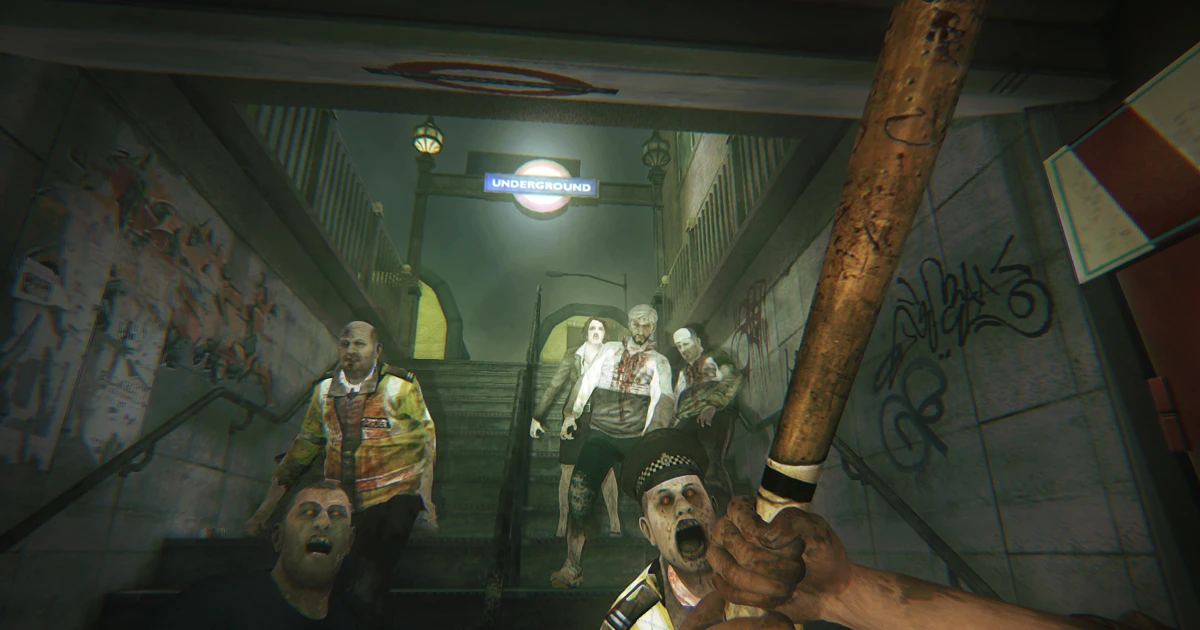
GAME INFORMATION
Game Title: Zombi
Platform Played:PlayStation 4
Available Platforms:PS4 / Xbox One / PC
Media Type:Digital
Developer:Ubisoft Montpellier
Publisher:Ubisoft
Genre:Survival Horror
Release Year:2015
PLAY ENVIRONMENT
Playtime:15 hours
Completion Status:Platinumed
Difficulty:Survival Mode
Graphics Mode:Default
Playthrough Type:Standard Playthrough
Game Version: Latest Version
Controller Used:DualSense
Display Environment:1080p Monitor
QUICK VERDICT
Zombi is a survival horror game built around pressure, loss, and careful movement. Its strongest ideas come from how it treats death, exploration, and resource management. Every mistake matters, every room feels unsafe, and every journey away from the safe house carries risk.
At its best, Zombi creates a level of tension that many horror games struggle to maintain. It understands that fear does not always need to come from loud scares or overwhelming action. Sometimes, fear is simply opening a door without knowing what is waiting on the other side.
However, the game is also held back by combat that becomes too repetitive over time. The melee system is slow, firearms are heavily discouraged by limited ammunition, and enemy variety does not evolve enough to keep encounters fresh.
Even with these flaws, Zombi remains a memorable survival horror experience. It is not a perfect game, but it has strong ideas, clear identity, and a constant sense of danger that makes it worth playing.

PROS & CONS
pros
- Innovative death system that reinforces tension
- Strong atmosphere built through lighting and sound
- Resource management feels meaningful
- London setting gives the game a strong identity
- Memorable supporting characters
cons
- Melee combat becomes repetitive
- Limited enemy variety
- Some encounters feel more slow than tense
- Player survivors lack emotional identity
STORY & NARRATIVE
Zombi tells a familiar zombie survival story, but it does enough with its setting and characters to remain interesting. The game takes place in a ruined version of London, where the city has collapsed under the weight of infection, panic, and failed control.
The player is guided by the Prepper, a mysterious survivalist who communicates from a safe location and gives instructions throughout the journey. He is one of the most important parts of the story because his voice becomes a constant presence. He helps you, warns you, judges you, and slowly becomes harder to fully trust. His motivations are not always clear, which gives the game a useful sense of uncertainty.
The main plot itself is not especially original. It uses many familiar zombie ideas: infection, survival bunkers, hidden groups, secret research, and powerful people trying to control what they do not understand. On its own, the story is not the strongest part of the game.
Where Zombi becomes more memorable is in its supporting characters and locations. The game includes strange, desperate, and morally questionable figures who make the world feel more alive. Some characters are helpful, some are dangerous, and some feel like they have been broken by the world around them. These moments add personality to the experience and stop the game from feeling like a simple zombie checklist.
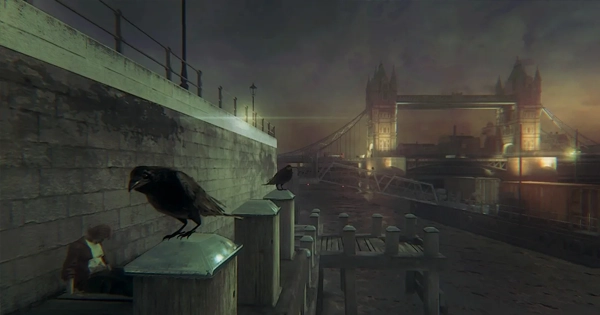
The London setting also helps the narrative. Exploring places connected to British history gives the game a different flavour from many other zombie games. Areas such as Buckingham Palace give the world a sense of identity, even when the broader plot is using familiar genre material.
The weakest part of the narrative is the player character. Because of the game’s death system, survivors are designed to be replaceable. When one dies, another takes their place. This supports the gameplay, but it also means the player rarely forms an emotional connection with the person they are controlling.
Each survivor may have a different name, appearance, or background, but they mostly function as a body carrying equipment. This makes sense mechanically, but it limits the emotional weight of the story. You care about losing your gear more than losing the person.
Still, this choice does fit the tone of the game. Zombi is not about becoming a hero. It is about surviving for as long as possible in a world that does not care who you are.
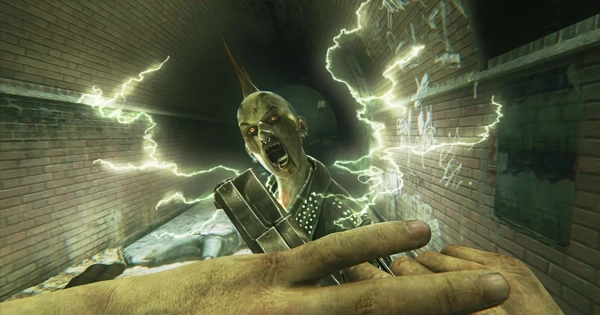
GAMEPLAY & SYSTEMS
The strongest part of Zombi is its death system. When your survivor dies, they do not simply disappear. They become infected and remain in the world as a zombie, carrying the equipment they had at the time of death.
This creates a strong loop. If you want your items back, you need to return to the place where you died, find your former survivor, kill them, and recover your gear. This turns failure into part of the world rather than just a restart screen.
It is a simple idea, but it is very effective. Death has weight. A bad decision can cost you resources, progress, and confidence. Even a small mistake can create a new problem for the next survivor. Because of this, every journey outside the safe house feels important.
This system also changes how the player thinks. You become more careful. You check corners. You scan rooms. You think about whether a fight is worth it. You start asking simple but important questions: Do I have enough ammunition? Do I have healing items? Can I escape if something goes wrong?
The Prepper Pad is another important system. It acts as a scanner, map tool, and information device. It helps identify loot, routes, objects, and points of interest. This could have made the game too easy, but instead it helps reduce frustration. The player still has to make decisions, but they are not forced to waste time blindly searching every corner.
The inventory system also supports the survival horror tone. Managing space matters. Carrying too much can make you feel prepared, but it also increases what you risk losing if you die. Carrying too little can make exploration more dangerous. This balance gives the game a steady feeling of pressure.
However, combat is where Zombi struggles most.
Melee combat is slow and limited. Most fights involve keeping distance, waiting for an opening, striking with a weapon, and repeating the process until the enemy dies. At first, this feels tense because every zombie is a threat. Over time, the lack of depth becomes more noticeable.
The game wants combat to feel dangerous, and in many ways it succeeds. You are not meant to feel powerful. You are not meant to cut through enemies with ease. But there is a difference between making combat frightening and making it feel repetitive.
Firearms are useful, but ammunition is scarce. This means guns are often saved for emergencies. That fits the survival horror design, but it also means the player spends much of the game relying on slow melee encounters. When enemy variety is limited, this can make combat feel like a routine rather than a challenge.
The problem is not that Zombi is slow. Slow gameplay can be excellent in survival horror. The issue is that the combat does not evolve enough. New weapons and tools help slightly, but they do not change the core rhythm in a meaningful way.
As a result, Zombi’s gameplay is at its best before combat begins. The preparation, exploration, scanning, and fear of what might happen are stronger than the actual fights themselves.
WORLD DESIGN
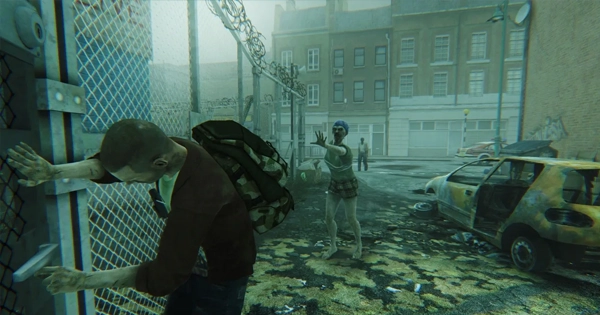
Zombi’s world design is one of its strongest qualities. The game presents London as a dangerous, broken space full of narrow paths, dark interiors, hidden supplies, and unsafe routes.
The world is not visually beautiful in a traditional sense, but it has a clear atmosphere. Streets feel abandoned. Buildings feel unsafe. Interiors are dark, quiet, and uncomfortable. The game does a good job of making ordinary locations feel threatening.
The structure of the world also supports survival horror well. Areas connect back to safe spaces, shortcuts become useful, and repeated journeys through familiar locations gain new tension depending on your resources and condition.
Because death can leave your former survivor in the world, locations also begin to carry personal meaning. A hallway is not just a hallway if that is where you died. A room is not just a room if your best equipment is now trapped inside with your infected body.
This gives the world a quiet memory. The game remembers your mistakes, and you have to face them.
The use of London landmarks also helps give the game a distinct identity. Many zombie games take place in generic cities, towns, or laboratories. Zombi benefits from having a recognisable setting. Even when the visuals are not especially impressive, the locations help ground the experience.
The world is not always surprising, but it is consistent. It knows what mood it wants to create and rarely breaks from it.
VISUAL DESIGN
Visually, Zombi is functional rather than striking. The game does not have a bold art style or highly detailed presentation. Character models, environments, and animations are modest, especially when viewed today.
However, the visual design still supports the game’s purpose. Clarity is important. The player needs to read spaces, identify danger, and understand where to move. Zombi does this well enough.
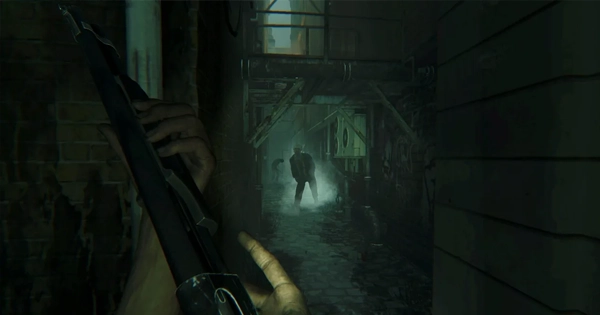
The strongest visual element is lighting. Darkness is used carefully, not just to hide detail, but to create pressure. Moving through dim rooms with limited information makes the player slow down. It creates hesitation, and hesitation is important to the horror.
The game does not rely on beauty. It relies on mood. In that sense, the visuals are successful, even if they are not memorable on their own.
SOUND & MUSIC
Sound design is one of Zombi’s greatest strengths.
The game uses audio to keep the player alert. Distant groans, sudden noises, footsteps, environmental sounds, and quiet spaces all contribute to the tension. The player is encouraged to listen carefully because sound often gives the first warning of danger.
The music is minimal, which works well for this kind of game. Instead of constantly telling the player how to feel, Zombi allows silence and ambience to create discomfort. This restraint makes the world feel colder and more dangerous.
The sound design also supports the slow pace. When nothing is happening, the player still feels uneasy because the audio keeps suggesting that something could happen at any moment.
For a survival horror game, this is essential. Zombi understands that fear often comes from waiting.
PERFORMANCE
Zombi performs reliably on PS4. During my playthrough, the experience was stable, with no major technical issues that damaged progression or immersion.
The game is not technically demanding by modern standards, but it runs well enough to support its design. Load times are reasonable, and the overall experience feels smooth.
There are no major performance problems to highlight. The game does what it needs to do without distraction.
DIFFICULTY
Difficulty Rating
7 / 10
Zombi is not difficult because of complex mechanics. It is difficult because of pressure, resource management, and the consequences of failure.
Individual zombies are usually manageable, but groups can become dangerous quickly. A single mistake can lead to panic, and panic can lead to death. The limited combat system makes this even more important because the player cannot easily rely on skillful action to escape every situation.
The game is fair most of the time. It gives the player tools, information, and opportunities to prepare. When you die, it often feels like the result of poor planning, impatience, or underestimating a situation.
The true challenge comes from staying calm. Zombi rewards patience, caution, and discipline. It punishes rushing.
REPLAY VALUE
Replay value is moderate.
The main reason to replay Zombi would be to experience the survival systems again with better knowledge. A second playthrough would likely feel smoother because the player understands the map, resources, and danger points more clearly.
The death system can also create different situations depending on how and where the player fails. This gives the game some natural variation.
However, the limited combat depth and familiar narrative reduce long-term replay appeal. Once the main experience has been completed, there is not a huge amount pushing the player to return immediately.
Zombi is more powerful as a single tense journey than as a game to replay many times.
RECOMMENDED FOR
Recommended for:
- Fans of survival horror focused on tension and atmosphere
- People interested in unique death mechanics
- Players who enjoy high-stakes gameplay systems
- Fans of resource management and careful planning
- Players who enjoy horror games with a strong sense of place
Not recommended for:
- Players who want fast or fluid combat
- People looking for deep enemy variety
- Players expecting modern visual polish
- Anyone who wants action horror over survival horror
PERSONAL EXPERIENCE
Zombi left a strong impression on me because of how consistently tense it felt. The game made even simple movement feel meaningful. Leaving the safe house, checking supplies, entering dark rooms, and deciding whether to fight or retreat all carried weight.
The permadeath system was the main reason for this. Knowing that death could leave my equipment behind made me play more carefully. I was not just afraid of dying. I was afraid of what dying would cost.
That is where Zombi is at its best. It creates fear through systems, not just presentation. The horror comes from risk, loss, and uncertainty.
However, the longer I played, the more the combat began to weaken the experience. At first, the slow melee system felt tense. Later, it became predictable. Many encounters started to follow the same pattern, which reduced the fear and made some moments feel more tiring than frightening.
Even so, I never lost interest completely. The atmosphere, world design, and survival systems kept the experience engaging. Zombi has flaws, but it also has a strong identity, and that matters.
It is the kind of game where the best ideas stay with you after the credits.
FINAL VERDICT
Zombi is a survival horror game defined by contrast.
Its atmosphere, death system, exploration, and resource management are strong. It creates tension with patience and restraint. It understands the value of silence, risk, and consequence. Few games make failure feel as connected to the world as Zombi does.
At the same time, its combat holds it back. The slow melee system works at first, but becomes repetitive across the full experience. Firearms are too limited to become a satisfying alternative, and enemy variety does not grow enough to keep encounters consistently interesting.
Because of this, Zombi falls short of greatness. It has the ideas of an excellent survival horror game, but not always the execution to match them.
Still, it remains a strong and memorable experience. It is tense, focused, and built around systems that genuinely support its horror. For players who enjoy slow survival horror and can accept limited combat, Zombi is absolutely worth experiencing.
It is not perfect, but it understands fear.