
GAME INFORMATION
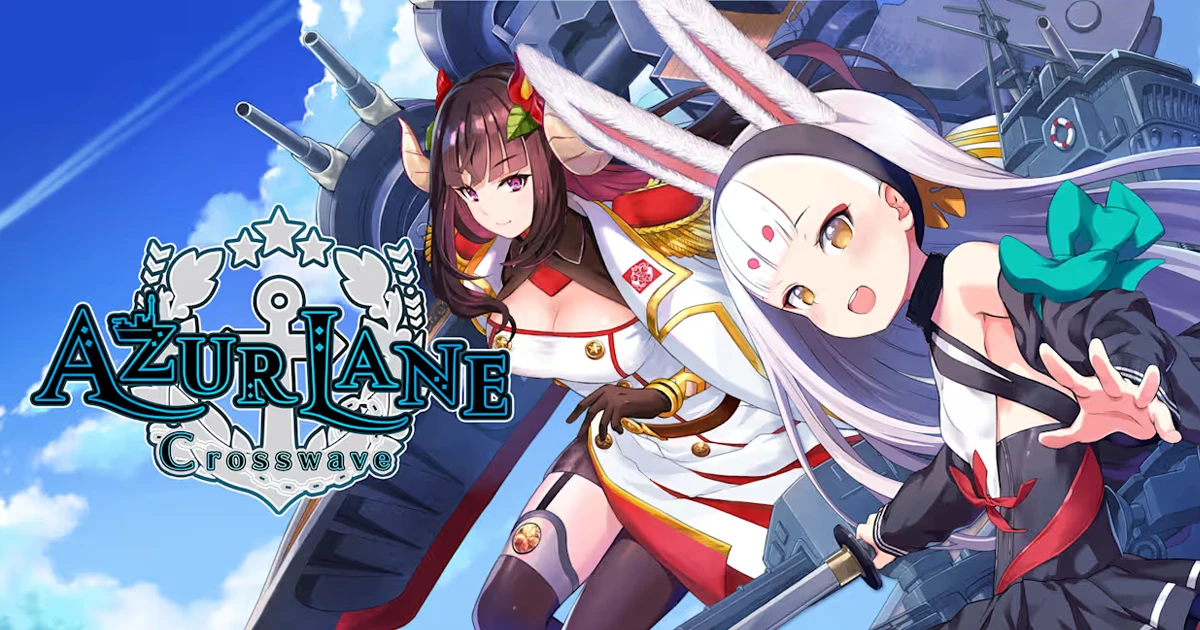
Game Title: Azur Lane: Crosswave
Platform Played:PlayStation 4
Available Platforms:PlayStation 4, Nintendo Switch, PC
Media Type: Physical
Developer:Idea Factory / Compile Heart / Felistella
Publisher:Idea Factory International
Genre:3D Action Shooter / Visual Novel
Release Year:2020
PLAY ENVIRONMENT
Playtime:15 hours
Completion Status:Completed
Difficulty:Hard
Graphics Mode:Default
Playthrough Type:Standard playthrough
Game Version: Latest Version
Controller Used:DualShock 4
Display Environment:1080p Monitor
QUICK VERDICT
Azur Lane: Crosswave is a simple, charming, and fan-focused 3D action shooter built around the world and characters of Azur Lane. Its battles are fun, smooth, and easy to understand, but they are often too short and separated by long visual novel sections. For existing Azur Lane fans, there is a lot to enjoy here. For players looking for deep action, complex level design, or constant combat, it may feel too light.
This is not a game that tries to be huge or mechanically ambitious. It is more like a calm side story, where familiar ship girls interact, grow, and fight together in short bursts of arcade-style action. When understood on those terms, it becomes much easier to appreciate.

PROS & CONS
pros
- Beautiful character artwork
- Fully voiced Japanese story scenes
- Simple and responsive combat
- Easy to enjoy for fans of the mobile game
cons
- Story scenes can feel too long
- Battle stages are often very short
- Pacing is uneven
- Not much depth for action-focused players
STORY & NARRATIVE
Azur Lane: Crosswave begins by introducing the world of Azur Lane and the major factions that exist within it. The Sakura Empire, Royal Navy, Ironblood, and Eagle Union are in a rare period of peace, and a joint military exercise is being organised to strengthen cooperation between them.
The story mainly follows two ships from the Sakura Empire: Shimakaze and Suruga. Shimakaze is energetic, cheerful, and full of enthusiasm, while Suruga is more reserved, serious, and uncomfortable with being placed in the spotlight. Their personalities are very different, and much of the early story comes from watching them learn how to work together.
This is where the game is at its strongest narratively. It is not a complex war drama or a deeply emotional character study, but it does understand the appeal of its cast. Shimakaze slowly matures through her experiences, while Suruga learns to become more patient and accepting of others. Their partnership gives the story a simple but pleasant emotional core.
Of course, the peaceful military exercise does not stay peaceful for long. The main threat comes from the Sirens, mysterious alien-like ships with advanced technology and an obsession with analysis. They are strange, dangerous, and always watching. After Suruga and Shimakaze encounter them during an exercise, the game’s conflict begins to unfold more clearly.
The story is presented mostly through visual novel-style scenes, with character portraits, dialogue, and full Japanese voice acting. For fans of Azur Lane, this is likely one of the main appeals. There are many interactions between familiar characters, and the game gives them space to speak, joke, argue, and show their personalities.
However, this also creates the game’s biggest pacing issue. The story scenes are long, frequent, and sometimes placed very close together. There are moments where you may go through several visual novel scenes before reaching another battle. Some of these scenes can last a long time unless you skip or fast-forward them.
If you care about the characters, this may not be a major problem. If you are here mainly for action, it can feel slow. Crosswave is not balanced like a pure action game. It is more of a character-focused fan game with action stages placed between story scenes.
The story itself is simple, but it has a soft charm. It works best when it focuses on the characters rather than the wider conflict. It is not trying to be grand or deeply philosophical. It is more about spending time with the fleet, seeing how different personalities interact, and enjoying the world in a more relaxed console format.
GAMEPLAY & SYSTEMS
The combat in Azur Lane: Crosswave is simple, fast, and enjoyable in short bursts. Battles take place on the water inside small square arenas. You control one ship girl directly, move freely across the stage, avoid enemy attacks, and fire back using your equipped weapons.
Each ship can use several types of attacks. Your main cannon is always available, while torpedoes, special skills, and other weapons usually need time to recharge. Anti-air weapons are handled automatically, which helps keep the action easy to follow. You also have a dash with brief invincibility frames, making movement and positioning important during more chaotic fights.
The controls feel responsive on PS4. Movement is smooth, aiming is simple, and attacks come out without noticeable delay. The game is not mechanically difficult, but it feels good enough moment to moment. There is a satisfying rhythm to firing your main cannon, waiting for torpedoes to recharge, using skills at the right time, and dashing away from incoming fire.
Enemy variety is fairly basic. You fight standard ships, aircraft, and eventually other ship girls. Battles against ship girls are usually the most interesting because they can be more dangerous and require better preparation. Having strong equipment and a good team setup makes a clear difference.
Progression is built around improving your fleet. You can upgrade weapons, equip stronger parts, buy new equipment from the shop, and collect materials from battles and boxes across the map. The shop updates as you move through the story, so it is worth checking regularly.
One of the better systems is recruitment. By earning A Points from battles, you can recruit over 50 ship girls from the Azur Lane universe. These characters are divided into different roles. Capital Ships fight with you on the frontline and add extra firepower, while Support Ships stay outside direct combat and provide buffs, healing, or other useful effects.
This gives the game a light team-building element. Certain ship combinations can unlock additional bonuses, encouraging you to think about who works well together. It is not a deeply complex system, but it gives you a reason to experiment with different fleets.
There are also familiar Azur Lane systems such as pledging yourself to characters with enough affinity and using Cognitive Chips once they reach level 100. These features improve stats and add more long-term progression for players who want to invest in their favourite characters.
The biggest weakness is not the combat itself, but how little time the game sometimes gives you to enjoy it. Many stages are extremely short. Getting an S Rank often requires finishing battles in under two minutes, and many fights naturally end very quickly anyway. Just when the action begins to feel enjoyable, the stage is often already over.
Because of this, Azur Lane: Crosswave can feel like it is holding back its own best feature. The battle system is fun, but the game rarely lets it breathe. It could have benefited from longer missions, more varied objectives, and more developed enemy encounters.
Even so, the gameplay is still enjoyable in a light arcade way. It is easy to understand, easy to play, and satisfying enough for short sessions. It will not satisfy players looking for a deep action system, but for fans who want to control their favourite ship girls directly, it does the job well.
WORLD DESIGN
The world of Azur Lane: Crosswave is more functional than expansive. This is not a game about exploration, large maps, or environmental discovery. Most of the world is delivered through dialogue, faction identity, character relationships, and battle arenas.
The faction setup gives the game a clear structure. The Sakura Empire, Royal Navy, Ironblood, and Eagle Union all have distinct personalities, designs, and cultural influences. For existing fans, seeing these factions interact during a joint exercise is part of the appeal. There is a light sense of international cooperation, rivalry, and tension, even if the story stays mostly playful.
The battle arenas are simple square spaces on the water. They look clean and readable, but they are not especially memorable as locations. Their main purpose is to support quick combat, not to create a strong sense of place. Because the stages are short and similar in structure, the world can feel smaller than it should.
The visual novel scenes do more of the world-building than the environments do. Through character conversations, the game gives small pieces of personality and context to the wider Azur Lane universe. This makes the world feel alive through its cast rather than through its level design.
In that sense, Crosswave feels closer to a character archive with battles attached than a traditional action adventure. The world is pleasant, but not especially deep. It works best if you already enjoy the Azur Lane setting and want another way to spend time inside it.
VISUAL DESIGN
Visually, Azur Lane: Crosswave has a clear strength: its character art. The portraits are clean, colourful, and familiar, with many assets carrying over from the mobile game. This helps the console version feel immediately recognisable to existing fans.
The character designs are the heart of the presentation. Each ship girl has a strong silhouette, distinct outfit, and clear personality. The game understands that much of the appeal comes from the cast, and it presents them with care.
The 3D battle models are also nicely handled. They are not the most detailed models on PS4, but they represent the characters well and look good in motion. Seeing the ship girls move across the water, fire cannons, launch torpedoes, and use special attacks gives the world a different feeling from the mobile version.
The water effects are one of the better visual elements. Since all battles take place on the sea, this matters a lot. The surface of the water gives the arenas some life, and the Unreal Engine 4 presentation helps make the action feel more polished than expected.
There are also special illustrations during key story scenes, which help break up the visual novel format. These moments add a nice sense of reward and give the story a stronger visual identity.
On PS4, the image quality is not perfect. The lack of anti-aliasing can make the game look rough at times, and there can be mild screen tearing. It is not a major issue, but it is noticeable. The game still looks nice overall, especially because the art direction is colourful and character-focused.
The visual style is simple but effective. It does not aim for realism or cinematic scale. Instead, it focuses on clean anime presentation, bright character designs, and readable action. For this type of game, that is enough.
SOUND & MUSIC
The sound design in Azur Lane: Crosswave is solid, especially because of the voice acting. The story events are fully voiced in Japanese, apart from narration text, and the voice actresses do a strong job bringing the characters to life.
For fans of the mobile game, the voices will feel familiar. The same voice actresses return, which helps maintain consistency across versions. This is important because Azur Lane is a character-driven series. The voices are not just decoration; they are a major part of the game’s identity.
Shimakaze’s energy, Suruga’s reserved personality, and the wider cast’s many different tones all come through clearly. Even when the story scenes become too long, the voice acting helps keep them pleasant to listen to.
The soundtrack is good, though not especially memorable. It has some catchy tracks and solid arrangements, but it rarely becomes the main focus. The boss battle theme from the mobile game is a nice touch and gives certain fights a familiar energy.
The game does not include an English dub, so players hoping for English voice acting may be disappointed. However, for a Japanese-focused game with a strong anime identity, the Japanese voice track feels natural and appropriate.
Overall, the audio presentation supports the experience well. The music is serviceable, but the voice acting is the real highlight.
PERFORMANCE
On PS4, Azur Lane: Crosswave runs at 30 FPS. The controls still feel responsive, and there is no major input delay, but the frame rate limit is noticeable if you are used to faster action games.
The game performs well enough for what it is. Battles are small, arenas are limited, and the action is easy to follow. There are no major performance problems that ruin the experience. However, the lack of anti-aliasing and occasional screen tearing make the PS4 version feel a little rough visually.
The PC version has low system requirements, so players with even modest hardware should have a good chance of running it. For players who value higher image quality or smoother performance, PC may be the better option.
The PS4 version is still perfectly playable. It is just not the cleanest or smoothest version available.
DIFFICULTY
Difficulty Rating
2 / 10
Azur Lane: Crosswave is not a very difficult game as long as you keep your equipment updated and pay attention to your fleet setup. Most battles are short, and S Ranks are usually not too hard to achieve.
The main challenge comes from stronger enemy ship girls and later encounters where better gear becomes more important. If you ignore upgrades, battles can become more dangerous. If you regularly improve your weapons, use support ships properly, and farm materials when needed, the game remains manageable.
The dash gives you a reliable way to avoid damage, and the simple control scheme makes the game easy to learn. There is not a huge skill barrier here. Instead, the difficulty is mostly about preparation.
For casual players and Azur Lane fans, this is a good thing. The game is relaxing and accessible. For action veterans, it may feel too easy or too limited.
REPLAY VALUE
The game offers more than just Story Mode. Extreme Battle mode gives you a set of extra combat challenges against stronger enemies, with special rewards available. There is also Photo Mode, where you can place up to three ship girls in different diorama-style scenes, and Episode Mode, which unlocks side stories when certain conditions are met.
These modes add some extra value, especially for fans who enjoy collecting characters, building teams, and spending more time with the cast. Extreme Battle is probably the most useful extra mode because it focuses more directly on combat.
However, these features do not dramatically change the overall experience. The replay value mainly depends on how attached you are to the characters. If you want to recruit more ship girls, raise affinity, unlock side episodes, and improve your favourite characters, there is a decent amount to do. If you only care about the main story and combat, you may not feel a strong reason to return after finishing.
RECOMMENDED FOR
Recommended for:
- Fans of Azur Lane
- Players who enjoy anime-style character games
- Collectors of Japanese physical games
- Players who like simple 3D action
- Players who enjoy visual novel scenes and fully voiced dialogue
Not recommended for:
- Players who want deep action combat
- Players expecting constant battles
- Players who need English voice acting
- Players unfamiliar with or uninterested in Azur Lane
PERSONAL EXPERIENCE
My time with Azur Lane: Crosswave was mostly positive, but it required the right mindset. This is not the kind of game you play for deep systems, huge battles, or a powerful narrative. It is a smaller, softer experience built around character appeal, simple action, and fan service.
The combat was more enjoyable than I expected. Moving across the water, using cannons and torpedoes, dodging attacks, and building a fleet all felt good. The controls were tight, and the battles had a nice rhythm. The problem was that I often wanted more of it. Many fights ended just as they started to become fun.
The visual novel sections were more mixed. Some scenes helped the characters feel more alive, especially Shimakaze and Suruga. Their relationship gave the story a simple sense of growth. But there were also times where the pacing slowed down too much. Having several long dialogue scenes between short battles made the game feel uneven.
Still, I appreciated the game’s honesty. It knows what it is. It is not pretending to be a major action RPG or a serious military story. It is a character-focused Azur Lane spin-off made for people who already like this world. When played from that perspective, it has a comfortable charm.
There is something pleasant about its simplicity. It is easy to pick up, easy to understand, and easy to enjoy in short sessions. It feels like a side dish rather than a full meal, but sometimes that is enough.
FINAL VERDICT
Azur Lane: Crosswave is a good fan game with enjoyable combat, charming characters, strong Japanese voice acting, and plenty of visual novel-style fan service. It successfully brings the world of Azur Lane into a simple 3D action format, even if it does not fully develop its best ideas.
The biggest issue is pacing. The battles are fun, but too short. The story scenes add personality, but can become too long and too frequent. This creates an uneven rhythm where the game often feels caught between being a visual novel and an action shooter.
Even so, there is still a lot to like here. The character art is lovely, the combat feels responsive, the fleet-building systems add light depth, and the overall presentation is clean and familiar. For fans of the mobile game, Crosswave offers a pleasant way to spend more time with the characters. For newcomers, it may still be enjoyable, but only if they are comfortable with long dialogue scenes and a lot of anime-style fan service.
This is not an essential action game, but it is a sincere and enjoyable adaptation. It is simple, colourful, and made with clear affection for its cast.
If you are looking for something light, character-focused, and easy to play, Azur Lane: Crosswave is worth considering, especially physically if you enjoy collecting Japanese games. Just do not go in expecting deep combat or constant action.