
GAME INFORMATION
Game Title: Black Clover: Quartet Knights
Platform Played:PlayStation 4
Available Platforms:PlayStation 4, PC
Media Type: Physical
Developer:ILINX Inc.
Publisher:Bandai Namco Entertainment
Genre:Third-person magic shooter / team battle action
Release Year:2018
PLAY ENVIRONMENT
Playtime:10 hours
Completion Status:Completed
Difficulty:Normal
Graphics Mode:Default
Playthrough Type:Standard playthrough
Game Version: Latest Version
Controller Used:DualShock 4
Display Environment:1080p Monitor
QUICK VERDICT
Black Clover: Quartet Knights is a game with a stronger idea than execution. It tries to turn the world of Black Clover into a four-versus-four magic shooter, with team roles, objective-based modes, character abilities, and an original story focused on Asta and Yami. For fans of the anime, there is some charm here. The cast is enjoyable, the magic attacks feel faithful enough, and the story gives a different look at Yami’s past and his connection to Asta.
However, the game often feels rushed, thin, and underdeveloped. The story has interesting moments but ends too quickly. The challenge episodes are useful for learning characters but become repetitive. The online modes have good ideas, but the maps are small, the balance can feel messy, and the player base feels quiet. The deck-building system also lacks depth, making customisation feel more limited than it should.
It is not a terrible anime game. It is a simple, sometimes enjoyable one. But it is also a game that needed more time, more content, and more polish to become something truly special.

PROS & CONS
pros
- The original story concept is interesting
- Playing from both Asta and Yami’s perspective is a good idea
- Magic attacks look and feel satisfying at times
- Fans of the anime will enjoy seeing familiar characters and abilities
- The character roles give battles some tactical structure
cons
- Story mode feels short and rushed
- Challenge episodes become repetitive
- Maps are small and not very memorable
- Online can feel empty depending on when you play
- Combat can become frustrating when teammates ignore objectives
STORY & NARRATIVE
The story of Black Clover: Quartet Knights takes an interesting approach by creating an original arc for the game. Instead of simply retelling the anime, it gives fans and newcomers a separate story to experience. This is a good decision because anime games can sometimes feel too predictable when they only repeat scenes the audience already knows.
The story begins after the early parts of the series. Asta, Yuno, and Noelle are already members of their Magic Knight squads. They have already grown through dangerous missions, and the world of magic is already established. This means the game does not spend too much time introducing the basics of Black Clover. For fans, this makes the story move faster. For newcomers, it may feel a little sudden, but the central idea is still easy enough to understand.
The world is built around magic. Almost everyone has magical power, except Asta. He has no magic at all, but he continues forward through hard work, physical strength, and perseverance. His dream is to become the Wizard King, even though the world itself seems to reject the idea. This is still the heart of Black Clover, and the game understands that.
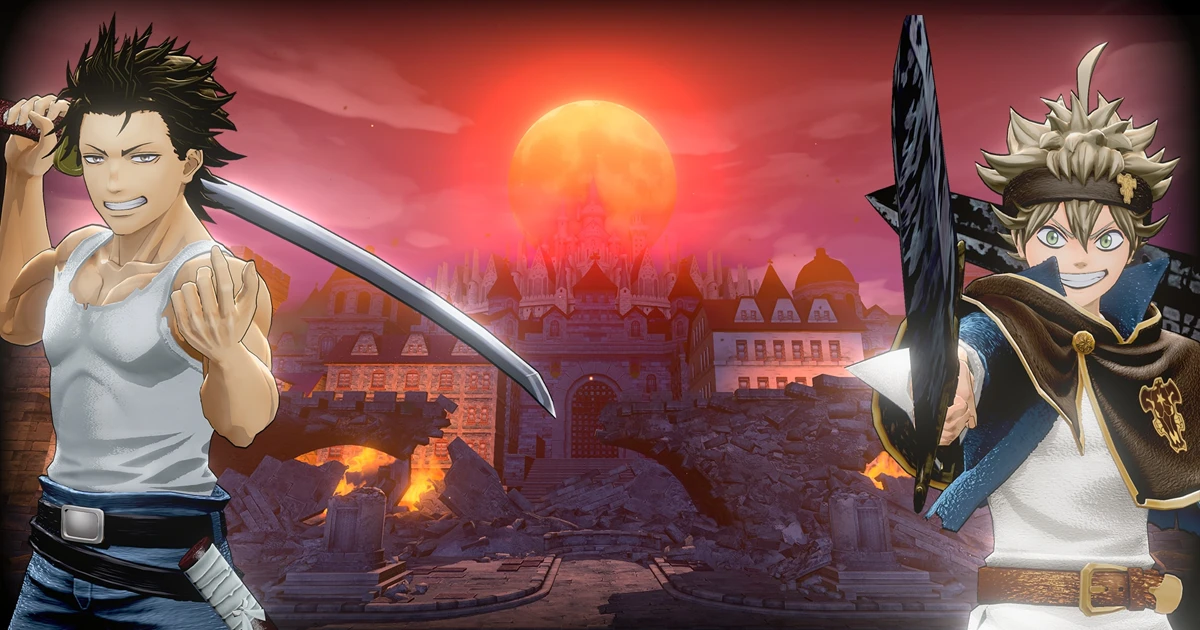
The main story begins when Yami, Asta, and Noelle investigate an old dungeon connected to the Freese House. After fighting through monsters and enemies, they discover a younger version of Yami with no memory of his later life. This creates the central mystery of the game and gives the story its strongest idea. Instead of only focusing on Asta, the game also looks at Yami’s past and personality.
This dual perspective is one of the best parts of the story. Being able to experience events from both Asta’s side and Yami’s side gives the game more structure than expected. It also gives more context to why Yami would choose someone like Asta for the Black Bulls. Asta has no magic, but he has spirit, stubbornness, and a refusal to give up. Yami, as a captain, is the kind of person who sees value in people that others ignore.
The problem is that the story does not have enough time to fully explore these ideas. The concept is good, but the execution feels rushed. Some scenes move too quickly, emotional moments do not always land, and side characters do not receive enough focus. The cast of Black Clover is full of strong personalities, but many of them feel underused here.
There are also visual novel-style scenes that feel stiff compared to the anime. The characters have more life during animated scenes and combat moments, but in still dialogue scenes, some of the charm is lost. The writing is not awful, but it does not always capture the same energy as the anime.
Even so, the story is still one of the more forgivable parts of the game. It tries something different. It gives Yami more attention. It creates a unique arc instead of simply copying the source material. For an anime game, that effort deserves some credit.
GAMEPLAY & SYSTEMS
The core gameplay of Black Clover: Quartet Knights is built around four-versus-four team battles. Instead of being a traditional arena fighter, the game plays more like a third-person magical shooter. Characters use magic attacks, support skills, healing abilities, movement tools, and special moves to control space and complete objectives.
This is a smart idea for Black Clover. The anime is built around different magic types, squad battles, and characters with very different abilities. Turning that into a team-based action game makes sense. Characters are divided into roles such as fighter, shooter, healer, and supporter. This gives the game some tactical identity.
Fighters are more direct and aggressive. Shooters attack from range. Healers keep the team alive. Supporters help control the battlefield. In theory, this creates a strong team structure where every player has a purpose. A balanced team should feel better than four players simply attacking at random.
Some characters are fun to use. Magna’s fire baseball attacks have a loud, rough energy that fits him well. Luck feels fast and aggressive, always wanting to fight up close. Asta’s anti-magic style gives him a different feeling from the mages around him. These touches help the game feel connected to the anime.
The combat is simple to understand. Basic attacks, special abilities, cooldowns, and movement all make sense quickly. This makes the game easy to pick up, especially for fans who may not usually play competitive shooters. However, the simplicity also becomes a weakness over time. There is not enough mechanical depth to keep every battle feeling fresh.
The biggest issue is that objective play can become frustrating. Many modes require teamwork, but online players do not always focus on the objective. When teammates chase kills instead of helping with the main goal, matches can become annoying. This is not only the fault of the game, but good objective games usually guide players clearly toward useful behaviour. Quartet Knights does not always manage this well.
The deck-building system also feels underdeveloped. Players can choose between different deck types that affect ability use, ammo, cooldowns, damage, and other small stats. On paper, this sounds like a good way to customise characters. In practice, the changes feel too minor. Cards usually offer simple improvements like reduced cooldowns, more damage, extra movement speed, higher health, or stronger shields.
There are only a few meaningful deck directions, so it becomes hard to create a build that feels personal. The system lacks character. It does not give enough room to counter certain playstyles or make your version of a character feel unique. Another issue is that the skill page is not easily viewable from the deck-building screen, which makes planning builds more awkward than it needs to be.
Challenge episodes add extra single-player content. Each character has an episode that helps introduce their playstyle. This is useful because it encourages players to try the full cast instead of only staying with one favourite. However, most of these episodes involve fighting similar groups of basic enemies. They teach the characters, but they also become repetitive quickly.
The game has good ideas. It understands that Black Clover should be about teamwork, roles, magic types, and pressure. But the systems do not go far enough. The foundation is there, but the game needed more depth, better balance, and more variety.
WORLD DESIGN
The world design is one of the weaker parts of the game. The Black Clover universe has many memorable places, factions, and battle locations, but Quartet Knights does not use them as strongly as it could.
The maps are functional, but not especially memorable. Many areas feel small, open, and simple. This can create problems during battles, especially for melee-focused characters. When pushing an objective or trying to move across the map, it can feel like attacks are coming from every direction. Ranged characters often feel safer, while close-range characters have to work harder to survive.
For a game based on an anime with so many dramatic locations, the maps needed stronger identity. They should have felt more connected to famous fights, magical environments, or important places from the series. Instead, many stages feel like basic arenas designed around function rather than atmosphere.
This does not mean the maps are unplayable. They work for the modes the game offers. But they rarely create excitement. They do not make the player stop and think, “This feels like Black Clover.” That is a missed opportunity.
VISUAL DESIGN
Visually, Black Clover: Quartet Knights is mixed. The game captures the basic look of the anime characters well enough. Asta, Yami, Noelle, Yuno, and the rest of the cast are recognisable, and their attacks use the right colours, effects, and magical style.
In combat, the game looks at its best. Magic spells, explosions, projectiles, and character abilities bring some energy to the screen. The action can become chaotic, but that also fits the feeling of a magical team fight. The game looks better when it is moving.
The weaker side comes from the story presentation. Some visual novel-style scenes feel flat and awkward. The characters do not always express the charm or emotion that they have in the anime. When compared to animated scenes, these moments feel less alive.
Customisation is also disappointing. Unlockable colours, voice lines, name tags, and some outfits give players something to work toward, but the variety is limited. Some characters receive more interesting looks than others. Asta and Yami benefit from unique versions, but many others rely heavily on simple palette swaps or limited costume options.
For fans, seeing the characters in different outfits can be fun, but the customisation system does not feel generous or creative enough. It gives rewards, but not always exciting ones.
SOUND & MUSIC
The sound design is serviceable. Character voices help carry the personality of the cast, especially because Black Clover is a series built on loud emotions, rivalry, comedy, and dramatic shouting. Characters like Asta, Magna, and Luck bring energy through their voice lines during combat.
However, repeated lines can become tiring. In longer sessions, hearing the same battle cries and attack lines again and again can make the audio feel repetitive. This is common in anime action games, but it still affects the experience.
The music supports the action, but it is not especially memorable. It gives battles enough energy, but there are not many tracks that stand out after playing. For a series with strong anime energy, the soundtrack could have had more impact.
PERFORMANCE
Performance is generally acceptable, though the game can feel visually busy during fights. With multiple characters using magic at once, the screen can become crowded with effects, projectiles, and movement. This can make it harder to read what is happening, especially in objective modes where positioning matters.
The game is playable, but it does not feel especially polished. Menus, deck-building, story presentation, and online flow could all have been smoother. Nothing completely breaks the experience, but many small issues add up and make the game feel less refined.
DIFFICULTY
Difficulty Rating
4 / 10
The game is not difficult because of complex controls. It is difficult because of team coordination, map awareness, and understanding your role. Learning a character is simple, but mastering when to attack, defend, heal, support, or push the objective takes more time.
The challenge episodes are not especially hard, but they can become repetitive. Online battles are where the difficulty changes the most. A good team can make the game feel smooth and tactical. A bad team can make it feel chaotic and frustrating.
Melee characters may also feel harder to use because open maps can leave them exposed to ranged attacks. Players who enjoy close-range fighting will need patience.
REPLAY VALUE
Replay value depends heavily on how much you enjoy the online modes and how much you love Black Clover. The story mode is short, so it does not offer much long-term value by itself. Challenge episodes add more content, but they are repetitive.
The online modes are the real focus. Crystal Carry works like a payload-style objective where teams fight to move a crystal toward the goal. Zone Control works like a king-of-the-hill mode where players fight over a point. Treasure Hunt asks players to collect keys and open chests for points, requiring more teamwork because the key carrier cannot defend themselves as freely.
These modes are good ideas, but the online population is a problem. If you cannot find matches easily, the game loses much of its purpose. This makes it harder to recommend as a long-term multiplayer game today.
Unlockables give some reason to keep playing, but the rewards are not varied enough to carry the experience alone.
RECOMMENDED FOR
Recommended for:
- Fans of Black Clover
- Players who enjoy anime arena games
- Players interested in team-based objective modes
- Players who can find the game cheaply
- People who want a short original story with Asta and Yami
Not recommended for:
- People who want a long story mode
- Players who dislike repetitive missions
- Players who need an active online community
- Newcomers who have no interest in Black Clover
PERSONAL EXPERIENCE
My experience with Black Clover: Quartet Knights was mixed, but not completely negative. I could see the good idea behind it. A Black Clover game focused on four-versus-four magic battles makes sense. The anime is already about different magic types, teamwork, rival squads, and characters proving themselves through battle. The concept fits.
I also liked that the story was not just a simple retelling. The focus on Yami and his younger self gave the game something unique. Even though the story is rushed, I respect that the developers tried to create an original arc. For fans, that gives the game some value.
The problem is that almost every part of the game feels like it needed more time. The story needed more scenes. The challenge episodes needed more variety. The maps needed stronger identity. The deck-building needed more depth. The online needed more players and better long-term support.
There were moments where I enjoyed the chaos of battle, especially when the team was working together. But there were also many moments where the game became frustrating because people were focusing on the wrong things or because the map design made fights feel messy.
It is a game I can forgive in some ways because its heart is in the right place. It wants to be more than a basic anime arena fighter. It wants to be tactical, objective-based, and character-focused. But wanting to be interesting and fully becoming interesting are not the same thing.
FINAL VERDICT
Black Clover: Quartet Knights is a flawed but sincere anime game. It has an interesting original story, a good focus on Asta and Yami, and a team-based battle system that fits the world of Black Clover. The character roles are a smart idea, and the objective modes give the game more structure than a simple fighting game.
However, the final result feels rushed. The story is too short, the side characters are underused, the challenge episodes are repetitive, and the deck-building system does not offer enough freedom. The maps lack personality, and the online mode, which should be the heart of the game, can feel empty.
For fans of Black Clover, there is still something here. It is worth trying if you find it cheap and want to experience a different side of the series. For everyone else, it is harder to recommend. The game has charm, but not enough strength to stand confidently outside its anime license.
Like Asta himself, Quartet Knights has spirit. It tries hard. But unlike Asta, it does not fully overcome its limits.