
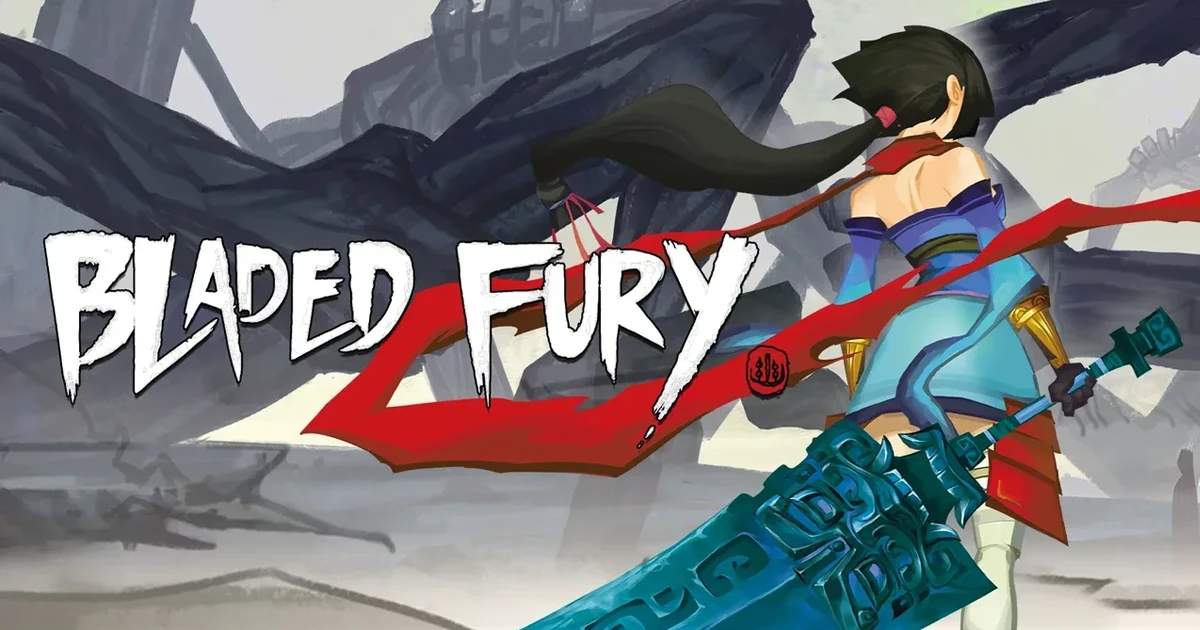
GAME INFORMATION
Game Title: Bladed Fury
Platform Played:PlayStation 4
Available Platforms:PC, Nintendo Switch, PlayStation 4, Xbox One
Media Type: Physical
Developer:NEXT Studios
Publisher:NEXT Studios / PM Studios
Genre:2D Side-Scrolling Hack and Slash
Release Year:2018
PLAY ENVIRONMENT
Playtime:4 hours
Completion Status:Completed
Difficulty:Normal
Graphics Mode:Default
Playthrough Type:Standard playthrough
Game Version: Latest Version
Controller Used:DualShock 4
Display Environment:1080p Monitor
QUICK VERDICT
Bladed Fury is a stylish and atmospheric 2D action game with beautiful Chinese-inspired art, a strong mythological setting, and some interesting combat ideas. However, simple enemy design, basic platforming, repetitive levels, and serious performance issues on Switch stop it from becoming something truly memorable.
There is beauty here. There is potential here. But the blade itself feels unfinished.

PROS & CONS
pros
- Beautiful hand-drawn visual style
- Strong ancient Chinese setting
- Short and easy to finish
- Some enjoyable boss encounters
- Mythology and history are used well
cons
- Combat becomes repetitive quickly
- Platforming is too simple
- Level design feels bland
- Exploration is not rewarding
STORY & NARRATIVE
Bladed Fury takes place during the Warring States period of ancient China, a time of political conflict, betrayal, war, and unstable power. This is already a strong foundation for a game, but Bladed Fury also adds mythology, spirits, monsters, and supernatural powers to create a setting that feels larger than ordinary history.
The story follows Ji Jiang, the daughter of Duke Kang of Qi. At the beginning of the game, her father is murdered, and Ji is framed by the rival Tian clan. Her sister, Shu, is also imprisoned, leaving Ji with nothing but her anger, her weapons, and her desire to uncover the truth.
From there, the story becomes a journey of revenge and restoration. Ji must hunt down those connected to her father’s death, defeat powerful enemies, consume their souls, and gain new powers from them. It is a simple revenge tale, but it works well enough for the kind of game Bladed Fury wants to be.
The narrative is not deeply emotional, and it does not spend enough time developing Ji or her relationship with Shu. However, the overall setup is strong. Ancient China, royal betrayal, family tragedy, and supernatural justice all come together nicely. The game understands the appeal of its setting, even if it does not fully explore every part of it.
For Japanese readers and players who enjoy games with historical atmosphere, mythological imagery, and a slightly theatrical tone, Bladed Fury has an immediate charm. It feels like a game built around mood first. The world is not explained in heavy detail, but the visual presentation does a lot of the storytelling.
The result is a story that is easy to follow, stylish, and engaging enough to carry the short adventure. It is not unforgettable, but it gives the player a clear reason to keep moving forward.
GAMEPLAY & SYSTEMS
Bladed Fury is a side-scrolling hack and slash action game with light platforming and some simple exploration. On paper, it has many of the right ingredients: fast attacks, heavy attacks, dodging, blocking, parrying, upgrades, boss powers, and cinematic special moves.
Ji uses two main weapons. Her Fiendbane blades are used for fast light attacks, while the Crimson Mass greatsword provides heavier strikes and can also be used to deflect projectiles. This gives combat a basic rhythm of quick pressure and heavier punishment. There is also the Aegis, a shield-like defensive system that allows Ji to block attacks or perfectly parry enemies.
The problem is that the game rarely demands much from these systems. Most normal enemies can be defeated by using the same few attacks repeatedly. The parry system exists, but it often feels optional rather than essential. Dodging is useful, but enemy behaviour is usually too simple to create much tension. Because of this, combat can feel flashy on the surface but quite shallow underneath.
The upgrade system also feels basic. Defeated enemies drop yellow orbs, which can be used to unlock new moves and improvements. This gives a small sense of progression, but it never dramatically changes the way the game is played. Many upgrades feel like additions rather than necessary tools.
Where Bladed Fury becomes more interesting is with the Soul Sliver system. After defeating bosses, Ji gains special powers that can be equipped and used in combat. These include attacks such as pulling enemies into a black hole, summoning arrows, slowing enemies with spider webs, or firing a powerful cannon-like weapon.
These abilities are visually impressive and give the combat more personality. They also create moments where the game briefly feels more strategic. Choosing which Soul Sliver to use and when to use it adds a welcome layer to the action.
However, even this system is held back by the enemies. Because most enemies are not aggressive or complex enough, the Soul Sliver abilities often feel more stylish than necessary. They are fun to use, but the game does not force the player to master them.
The bosses are the strongest part of the gameplay. They provide more interesting patterns, better visual spectacle, and more pressure than standard encounters. The final stretch of the game, especially the miniboss rush near the end, finally reaches the kind of challenge that should have appeared earlier. Sadly, by this point, the Switch version’s performance problems make the challenge feel rough rather than satisfying.
Bladed Fury has good combat ideas, but it does not sharpen them enough. The systems are there. The style is there. But the enemy design and encounter structure do not push the player to use everything properly.
WORLD DESIGN
The world of Bladed Fury is one of its most appealing elements. The state of Qi, the supernatural enemies, the ancient architecture, and the mythological creatures all create a strong sense of place. The game has a clear identity, and that identity is built around ancient Chinese beauty, violence, and spiritual mystery.
However, the actual level design is much weaker than the world concept.
Most areas are simple side-scrolling routes with a few branching paths. There is a map, but it is plain and functional rather than interesting. Exploration rarely feels rewarding. Taking an optional route usually leads to a small number of upgrade orbs, but not to meaningful secrets, memorable encounters, or unique discoveries.
This is disappointing because the world feels like it should be hiding more. A setting filled with betrayal, spirits, ancient ruins, and mythology should invite curiosity. Instead, the levels often feel like corridors decorated with beautiful artwork.
There are a few good ideas. One area asks the player to collect stones and place them into a central map to open new paths. This gives a small puzzle-like structure to progression and shows that the developers had some creative ideas. But these moments are rare.
Platforming is also very basic. Traps are simple, usually involving rotating flames, spikes, or timed hazards. They are not terrible, but they do not add much excitement. The platforming feels more like a small obstacle between fights rather than a strong part of the game’s identity.
Overall, the world has atmosphere, but the level design lacks depth. Bladed Fury looks like a journey through myth and history, but it often plays like a straightforward series of rooms.
VISUAL DESIGN
Visually, Bladed Fury is easily at its best. The game has a beautiful 2D art style that immediately stands out. Character designs are sharp, backgrounds are rich, and the use of ancient Chinese visual influence gives the game a distinct identity.
There is a clear comparison to games like Muramasa: The Demon Blade, especially in the way Bladed Fury presents side-scrolling action through painterly environments and theatrical combat animation. It does not reach the same level of polish or mechanical elegance, but the influence is easy to appreciate.
Ji herself has a strong design. Her movements are graceful, her attacks have style, and her weapons give her a clear visual presence. The Soul Sliver abilities are also impressive, often filling the screen with dramatic effects that make combat look more exciting than it actually is.
Enemy designs are more mixed. Some bosses and supernatural creatures look excellent, but many regular enemies are not memorable. They serve their purpose, but they do not leave a lasting impression.
The backgrounds help carry the game’s atmosphere. Palaces, ruined paths, spiritual spaces, and mythological scenes all give Bladed Fury a strong visual mood. Even when the gameplay feels ordinary, the art direction keeps the experience from feeling empty.
This is the main reason Bladed Fury remains interesting. It is a game with a strong face, even when its hands are not as skilled.
SOUND & MUSIC
The sound design supports the setting well. The music and effects fit the ancient Chinese atmosphere, giving the journey a sense of drama and spiritual weight. It is not a soundtrack that completely takes over the experience, but it does its job.
Combat sounds are satisfying enough, especially when using heavier attacks or Soul Sliver powers. The screen-shaking special abilities have impact, and the audio helps sell their power.
That said, the music is not as memorable as the visuals. It supports the mood, but very few tracks stand out after finishing the game. Bladed Fury is stronger as a visual experience than an audio one.
Still, the soundscape works. It respects the setting, keeps the action moving, and gives the world enough atmosphere to feel alive.
PERFORMANCE
During normal encounters, the frame rate can feel unstable. When the action becomes busier, especially during boss fights or moments with multiple effects on screen, the game can stutter heavily. In a hack and slash game, this is a serious problem because timing matters. Dodges, parries, jumps, and attacks all need to feel responsive.
When the game runs poorly, mistakes feel less fair. A missed block or failed jump can feel like the result of stutter rather than player error. This becomes especially frustrating near the end of the game, where the challenge finally increases.
There are also other technical problems. Moving between areas can cause black loading screens, which breaks the flow. For a short side-scrolling action game, this feels outdated. There can also be crashes during important encounters, which is even more damaging.
One strange issue is the death animation. Sometimes the screen fades to black too quickly, making it hard to see exactly what killed Ji. This may sound small, but in action games, understanding your mistake is important. If the player cannot clearly see what went wrong, learning becomes harder.
These problems do not completely ruin Bladed Fury, but they do make it harder to recommend for all players.
DIFFICULTY
Difficulty Rating
2 / 10
For most of its runtime, Bladed Fury is not very difficult. Standard enemies rarely apply enough pressure, and the player can often win by repeating basic attacks. The shield, parry, dodge, and Soul Sliver systems give Ji many tools, but the game does not often require careful use of them.
The difficulty improves near the end. The final stretch introduces stronger encounters and a miniboss rush that feels closer to what the game should have been from the start. Here, the player must pay more attention to timing, positioning, and enemy patterns.
Unfortunately, the performance issues make this late-game difficulty feel inconsistent. A harder challenge can be satisfying when the game feels smooth and fair. In Bladed Fury, the increased challenge sometimes feels messy because the frame rate struggles during the most important moments.
Overall, this is not a game for players seeking deep mastery or intense action combat. It is better suited to players who want a short, stylish experience with light challenge.
REPLAY VALUE
Replay value is limited.
Bladed Fury is short, which can be a positive thing. It does not overstay its welcome, and it can be completed in one or two sittings. However, there is not much reason to return after finishing the story.
The combat does not have enough depth to encourage mastery. The levels do not hide enough meaningful secrets. The upgrade system is not exciting enough to make a second run feel different. Unless a player strongly enjoys the art style or wants to experiment more with Soul Sliver abilities, one playthrough will likely be enough.
For backlog-focused players, this can be a good “finish and move on” game. It is short, visually pleasant, and easy to complete. But it is not the kind of game that demands long-term attention.
RECOMMENDED FOR
Recommended for:
- Players who enjoy short 2D action games
- Fans of ancient Chinese mythology and history
- Hack and slash fans looking for something simple
- Players who value art direction and atmosphere
Not recommended for:
- Players looking for deep combat systems
- Players who expect difficult or technical action
- Players who want rewarding exploration
PERSONAL EXPERIENCE
My time with Bladed Fury was mixed.
At first, I was drawn in by the style. The art direction, setting, and mythological tone made a strong first impression. There is something immediately appealing about a revenge story set in ancient China, especially when it is presented with this much visual confidence.
The early combat also felt enjoyable. Ji moves well, the weapons look cool, and the Soul Sliver powers add a nice sense of spectacle. For a while, the game feels like it might become a hidden gem.
But as the playthrough continued, the weaknesses became harder to ignore. The combat did not grow enough. The enemies did not push me enough. The levels looked good, but they did not feel interesting to explore. I kept waiting for the game to become sharper, but it mostly stayed the same.
The final section was more engaging because the difficulty finally increased, but by then the performance issues became a major problem. Instead of feeling like the game was reaching its peak, it felt like the hardware or port was struggling to keep up with the action.
That left me with a strange feeling. I liked the idea of Bladed Fury more than the actual experience. I liked its world, its art, and its potential. But I did not feel fully satisfied by the way it played.
It is not a bad game. It is simply a game that feels unfinished in the areas that matter most.
FINAL VERDICT
Bladed Fury is a beautiful action game with a strong setting, stylish presentation, and some interesting combat ideas. Its use of ancient Chinese history and mythology gives it a clear identity, and the Soul Sliver system adds a welcome layer of visual excitement to its hack and slash combat.
However, the game never fully lives up to its own potential. The combat is too simple, the enemies are not demanding enough, the platforming is basic, and the level design rarely rewards curiosity. The biggest problem is the Nintendo Switch performance, which hurts the flow of combat and makes the stronger late-game encounters feel less fair than they should.
There are good pieces here. The art is strong. The story is decent. The atmosphere works. The bosses have moments of quality. But the full game does not come together as cleanly as it should.
For players who love stylish 2D action games and are willing to accept technical issues, Bladed Fury may still be worth trying on sale. For everyone else, especially on Switch, it is difficult to strongly recommend.
Bladed Fury has the shape of a fine blade, but not the sharpness.
It is beautiful to look at, easy to finish, and pleasant in short bursts.
But when judged as an action game, it does not cut deep enough.